


AIO or separate boards · Repair planning
When an FPV board needs replacing, an AIO and an FC/ESC stack create different purchasing decisions. An AIO combines the flight controller and motor-control electronics on one board; a stack separates them into assemblies that may be replaceable individually. That does not automatically make the stack cheaper to repair. The fault, available replacement revision, access, supporting parts and time needed to return the aircraft to service all matter. Start by identifying what has actually failed, then compare a complete AIO replacement with a documented single-board stack repair. Choose the option that restores a supported configuration, not simply the lowest-priced board.
Identify the assembly you could replace
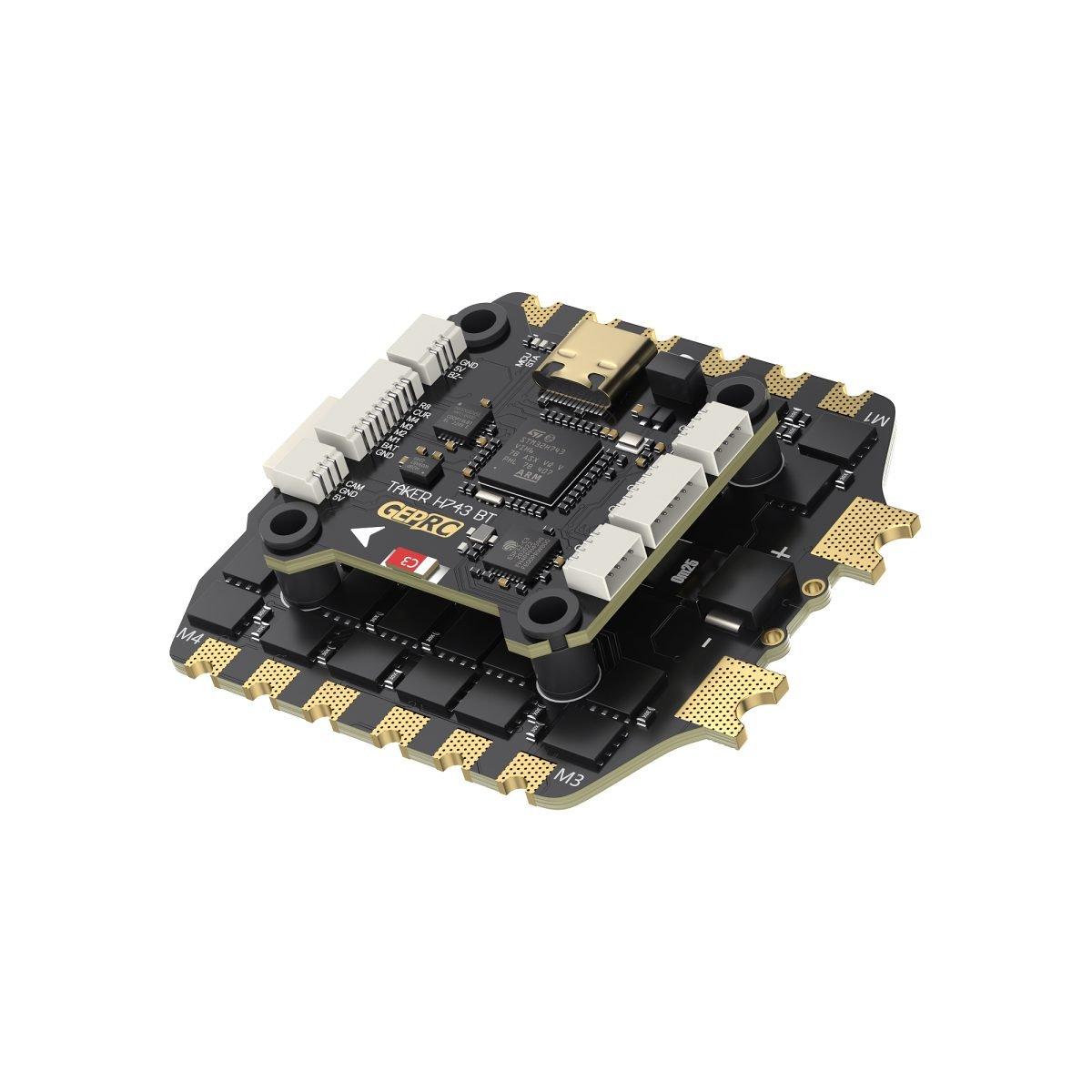
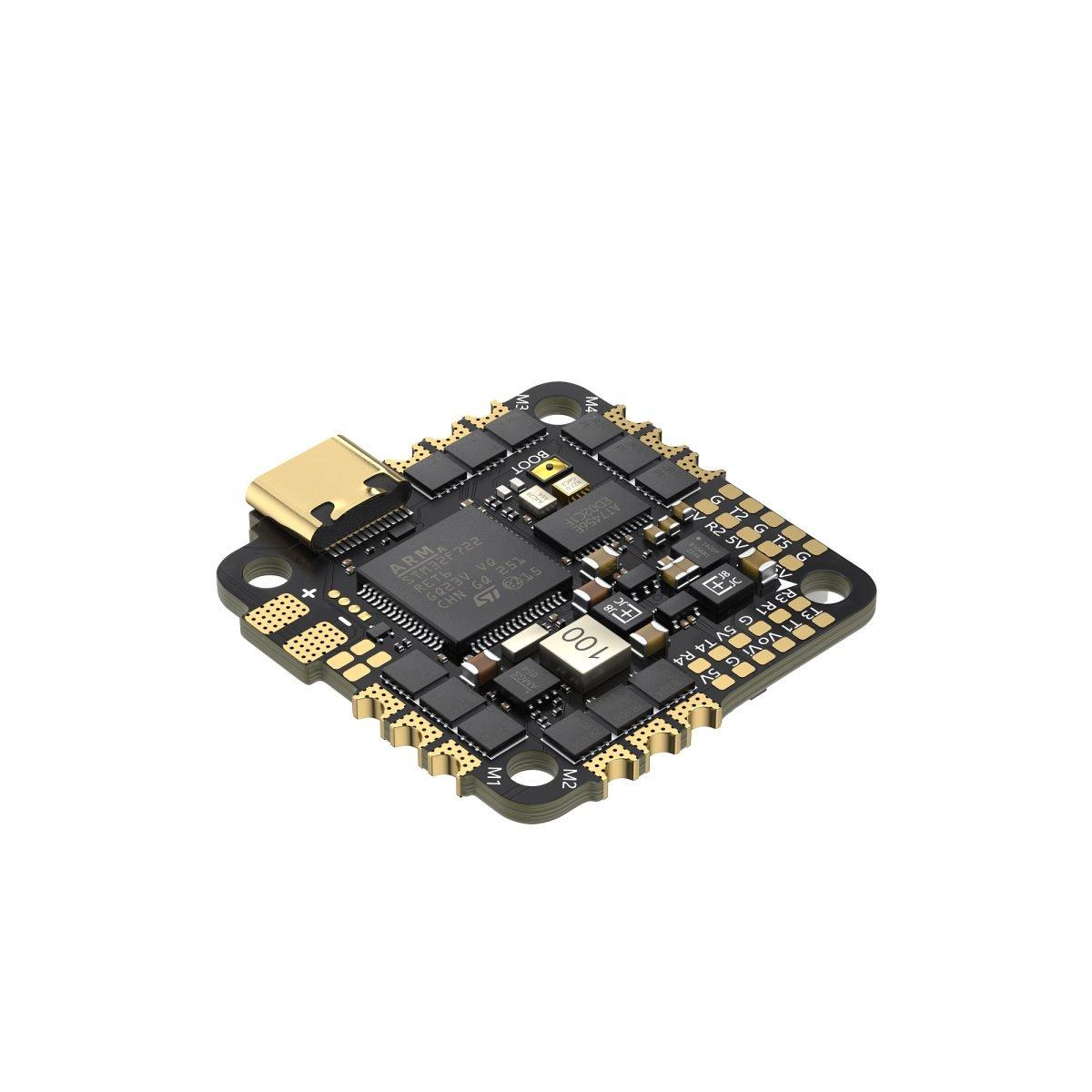
For this comparison, AIO means a board containing both the flight controller and a four-in-one ESC. It does not mean that the radio receiver, video transmitter or every other aircraft component is included. A stack instead has a separate controller board and ESC board, usually arranged together. The meaningful distinction for a replacement order is the boundary between those assemblies, rather than the processor name printed in a listing.
The TAKER F722 45A 32Bit AIO is the integrated example here. GEPRC lists one AIO board in its package, alongside cables, a capacitor and mounting accessories. Its H743 BT 8Bit 80A STACK listing names the controller and H80_BLS four-in-one ESC separately. These examples establish two different arrangements; they are not a recommendation to substitute one complete system for the other.
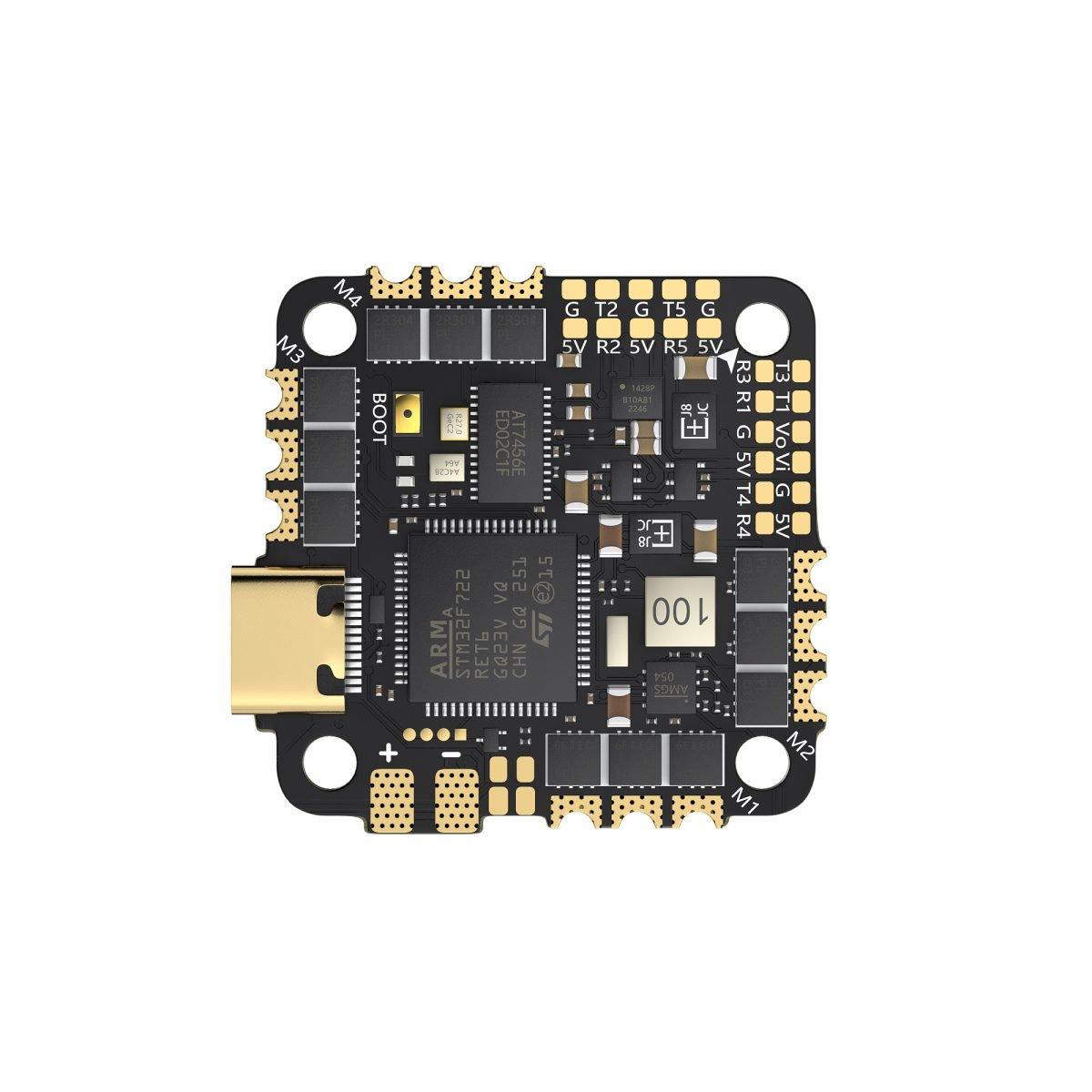
An integrated board can still contain a component that a specialist might repair. This guide compares purchasing replacement assemblies, not component-level rework. Before buying anything, ask whether the proposed service is a board exchange, a repair to the existing board, or a change to the aircraft design. Those are different jobs with different evidence and support needs.
Separate diagnosis from the shopping list
A symptom is not a spare-part number. A motor that does not respond, an intermittent connection or a controller that cannot be reached may lead to several possible causes. Ordering the assembly whose name sounds closest to the symptom can leave you with a new board and the original problem. Have the fault isolated by someone equipped to assess the particular build before setting the replacement scope.
For an AIO, a confirmed fault within its integrated ESC may make an entire board exchange the practical service option. That exchange also replaces controller hardware that might still have been working. For a stack, a confirmed ESC-only fault may allow the controller to remain. The word “may” matters: shared damage, damaged connections or an unsupported replacement combination can change that decision.
Ask for a short fault statement rather than a long list of symptoms. It should identify the affected assembly, explain what supports that conclusion and say which surrounding parts remain under review. This keeps the diagnosis separate from the seller's stock recommendation. It also gives a second technician enough context to understand why a particular replacement was ordered without repeating the entire investigation.
Decide what belongs in the same repair
Once the affected assembly is identified, make two lists: items being replaced and items intended to remain. The retained list deserves as much attention as the replacement list. A repair can be modest in purchase cost but still require substantial work if it disturbs the receiver, video equipment, mounting or configuration. Keep that work visible instead of hiding it under the phrase “board swap.”
| Confirmed situation | AIO purchase scope | Separate FC/ESC purchase scope |
|---|---|---|
| ESC assembly needs replacement | A complete AIO is the assembly-level replacement; controller hardware changes too. | The ESC may be replaced alone if the controller and retained combination are suitable. |
| Controller assembly needs replacement | A complete AIO also replaces the integrated motor-control hardware. | A controller-only replacement may retain the ESC, subject to the documented pairing. |
| Damage affects several assemblies | Assess the surrounding equipment before limiting the order to one board. | Separate boards do not establish that the neighbouring board is undamaged. |
| Original revision is unavailable | A different AIO may turn a replacement into a build change. | A different single board may also require a revised combination or complete stack. |
Price the complete job, not just the board
Compare quotations using the same end point: a documented, serviceable aircraft in the intended configuration. One quotation may cover only a bare board, while another includes supporting parts and the work needed to complete the repair. Neither can be judged fairly until those differences are stated. A smaller component bill is not automatically a smaller total repair bill.
Separate the quotation into replacement hardware, necessary supporting items, service labour, configuration work and return-to-service assessment. Then record shipping and any unavailable items separately. Avoid assigning an invented repair-time allowance. Ask the service provider what must be removed, what is being retained and what would cause the quoted scope to change.
This is where the AIO and stack comparison becomes specific to your build. An AIO may mean buying more electronics as one assembly. A stack may offer a smaller replacement purchase but introduce a search for the correct standalone part. Conversely, an available matched stack might be more practical than waiting for a particular single board. Get current availability for the actual item; a product-family page is not a delivery commitment.
Choose spares around your downtime
A pilot with one aircraft and flexible flying plans has a different spare-parts problem from a club maintaining several identical trainers. The first may prefer to diagnose a fault before ordering. The second may benefit from a small, clearly identified reserve of the assemblies already used across its fleet. Neither approach requires predicting failure rates that you have never measured.
Standardising compatible builds can reduce the number of spare versions you need to track, but only while the delivered revisions remain suitable. Label stored spares with their exact identity and intended aircraft configuration. Keep an unused spare, a removed but unassessed board and a confirmed faulty assembly in separate categories. Otherwise, finding a board in the parts drawer can be mistaken for finding a usable replacement.
For an AIO reserve, the unit being stocked covers both controller and ESC functions. For a split arrangement, decide whether you need controller-only stock, ESC-only stock or a matched pair. Base that decision on actual service history and purchasing lead times. Do not stock unrelated boards merely because they share a processor family, current label or mounting pattern.
Write a replacement identity record
The most useful order attachment is a compact record of the existing build and proposed replacement. It need not reproduce every specification. It should resolve the questions that would otherwise create a second order, an unusable spare or an undocumented redesign.
- Existing assembly: full model name, readable board identification, revision where available, and its role in the aircraft.
- Replacement assembly: the precise item quoted, its revision information and whether it is supplied alone or as a package.
- Retained equipment: the controller or ESC, receiver, video equipment and other parts expected to remain.
- Compatibility responsibility: who will establish the supported hardware combination and configuration, rather than assuming the old settings transfer unchanged.
- Service outcome: required configuration records, replacement identification and the agreed assessment before return to use.
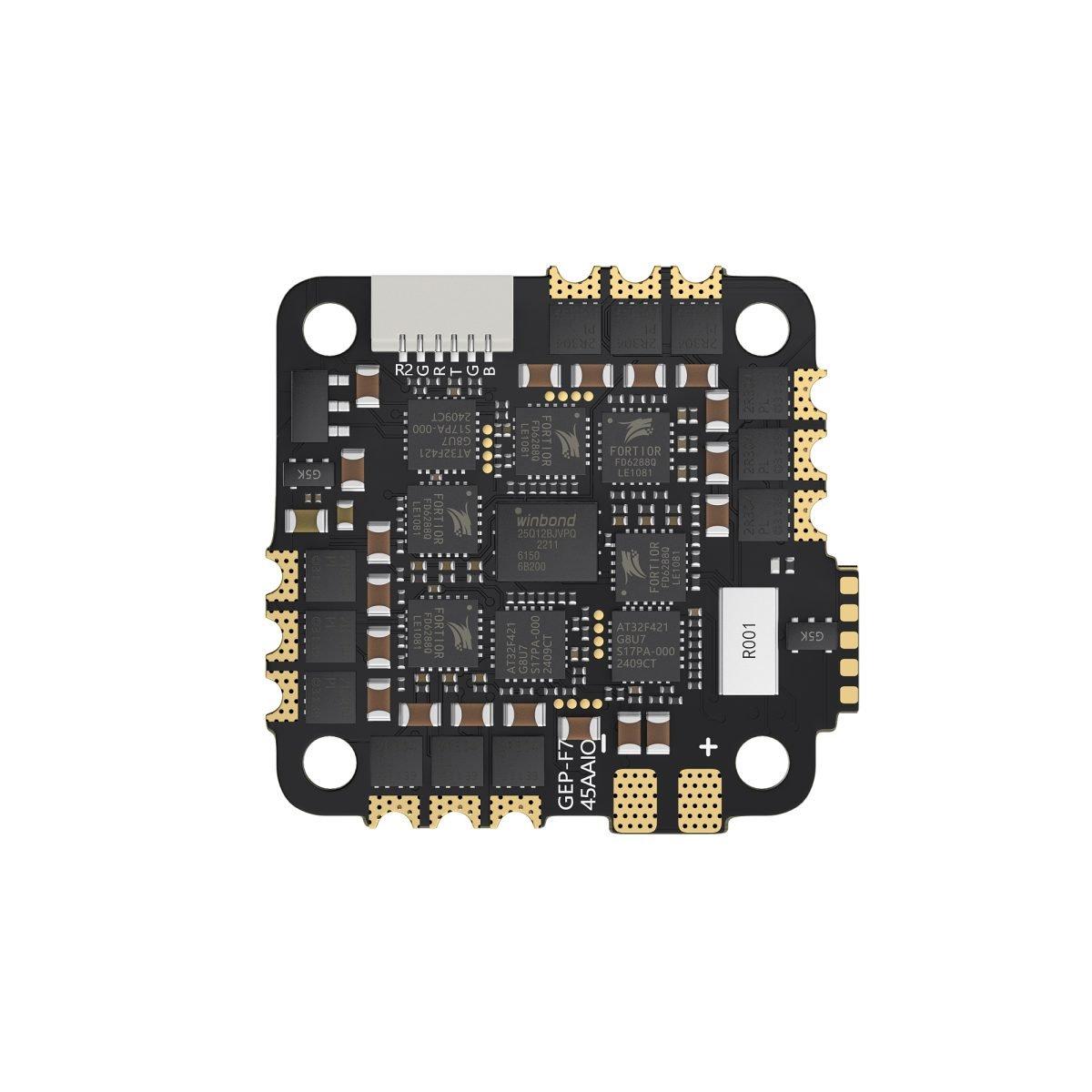
A revised item under a familiar product name is a reason to update this record. Treat an equivalent offered by a seller as a proposal to assess, not as a completed compatibility decision. If documentation and the supplied board do not agree, settle that discrepancy before the service job depends on the new part.
Five questions before ordering
- Does one failed ESC channel mean replacing every board?
- Not automatically. For an integrated AIO, assembly replacement includes the controller and ESC functions together. A separate four-in-one ESC can potentially be replaced while retaining the controller. Whether that is appropriate depends on the diagnosed fault and the condition and compatibility of the retained equipment.
- Is a stack always cheaper to repair?
- No. A separately available board can reduce the hardware being replaced, but the full comparison includes availability, supporting items, service work and assessment. Compare quotations for the same completed outcome rather than comparing the price of an AIO with the cheapest standalone ESC.
- Can I keep the flight controller when fitting a different ESC?
- Possibly, but the existing controller is not automatically compatible with the new choice. Have the exact pairing and required supporting connections established from current documentation. This is a component-selection decision, not permission to connect two boards because their plugs look alike.
- Should I buy a complete spare stack instead of individual boards?
- A matched spare may simplify stock identification, while individual boards may better match recurring, diagnosed service needs. Consider how many aircraft share the configuration and whether the separate items are consistently available. Keep both options in the quotation if availability is uncertain.
- Does replacing a board mean copying every old setting?
- No. Preserve the previous configuration as a reference, then have the replacement configured for its actual hardware and supported software. A revision change can require a different treatment. A saved file is useful evidence of the old build, not proof that applying it unchanged is appropriate.
Choose a repair scope you can support
An AIO concentrates the replacement into one assembly. A separate FC/ESC arrangement creates more opportunities to retain a working board, but those opportunities only matter when the replacement can be identified, obtained and supported. Neither arrangement removes the need for a clear diagnosis or makes an unfamiliar substitute equivalent.
Before ordering, write down the confirmed fault, the assembly to replace, the equipment to retain and the complete service cost. If those four answers are clear, compare the options. If they are not, resolve the missing answer before expanding the parts basket.
For the integrated example discussed here, use the TAKER F722 AIO product record to identify the listing, then confirm the supplied revision and package for your replacement enquiry.


 Tel: +86-13959965075
 Email: info@fpvdroneskit.com
 MP/WhatsApp: +86-13959965075
 Manufacturer Address:Quanzhou Valley Nanan Science and Technology Innovation Center, No. 89 Shijing Avenue, Shijing Town, Nanan City, Fujian Province