Author:Military Drone Manufacturer TIME:2026-10-10
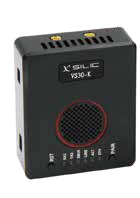
For FPV drone projects, Ethernet, UART, S.Bus and USB labels do not fully specify the delivered endpoints of a VS30K Video Transmission Module configuration. The order needs two named endpoint devices, the selected Ethernet or USB arrangement, the connectors and harnesses supplied, and the data assigned to each path. Keep the module's documented size and input voltage separate from whole-system requirements. At handover, record the actual hardware and software identities, the agreed observations and any open item. A catalog label helps identify a configuration family; the accepted endpoint record defines what the supplier delivers and what the buyer can inspect.
“Ethernet at one end” leaves several purchasing decisions open. It does not name the device, its version, the part supplied with the module or the team responsible for making that connection usable. Start with two endpoint records, labelled A and B. Those labels describe the order paperwork; they do not imply a transmission direction or a technical role.
Give each record a device model, hardware revision and intended role in the project. Identify whether the device is supplied under this order, provided by the buyer or purchased from another vendor. For an ordinary inspection workstation, the video source and the display or recording device may belong to different orders. Keeping their ownership visible prevents a module receipt from being mistaken for acceptance of the complete workstation.
The VS30K brochure names Ethernet-to-Ethernet as a default arrangement and Ethernet-to-USB and USB-to-USB as custom arrangements. These names offer a starting point for the endpoint schedule. They do not settle how many units are included or which adapters, computers and applications accompany them. Ask the supplier to attach the exact configuration identifier to the offer and repeat it on the packing record.
A useful connection schedule has three fields that are often compressed into one. The connector field identifies the physical termination on the supplied equipment. The harness field identifies the cable or adapter supplied to reach the other device. The protocol field describes the agreed data interface between those devices. An entry reading only “USB” leaves the first two fields unresolved and may leave software requirements unresolved as well.
The VS30K table uses a four-pin interface description. That description is insufficient to derive a pin assignment, voltage on a contact or a standard socket type. Request the supplier's version-specific drawing and a reference for the associated harness. This article does not supply wiring instructions; the connection documentation must come from the equipment supplier and match the delivered revision.
| Field | Write down | Evidence to retain |
|---|---|---|
| Connector | Supplier's connector identifier and equipment revision | Referenced drawing for that version |
| Harness or adapter | Part number, quantity and supply responsibility | Packing-list item and accessory description |
| Data interface | Named interface and intended data path | Configuration description accepted by both parties |
| Endpoint software | Required application or driver, where applicable | Supplier's supported-version statement |
A replacement cable then has a specific reference. A changed application can be reviewed against an identified dependency. Neither decision needs to rely on a photograph of a connector or on an interface abbreviation copied from a listing.
Copy the chosen arrangement into the order line and the endpoint schedule. For the listed Ethernet-to-Ethernet version, request the supplier's description of both Ethernet endpoints. For Ethernet-to-USB, identify which endpoint has the USB interface and what host equipment or software it requires. For USB-to-USB, identify both supported endpoint devices. These questions establish delivery scope without assuming that the configurations behave identically.
When a supplier proposes a custom arrangement, give it a revision or configuration code. Keep the proposal attached to the accepted offer. If a later offer uses the same model name with a different arrangement, compare the endpoint records before treating it as an interchangeable replacement. The short model name may stay the same while the supplied accessories or software dependencies change.
The brochure also associates throughput labels with configurations. A quoted value needs its configuration and measurement conditions to be useful. Ask which endpoint arrangement the value describes and what supporting document the supplier can provide. Avoid transferring that label into a promise about a complete camera-to-display setup. This guide provides no measured throughput or latency result for VS30K.
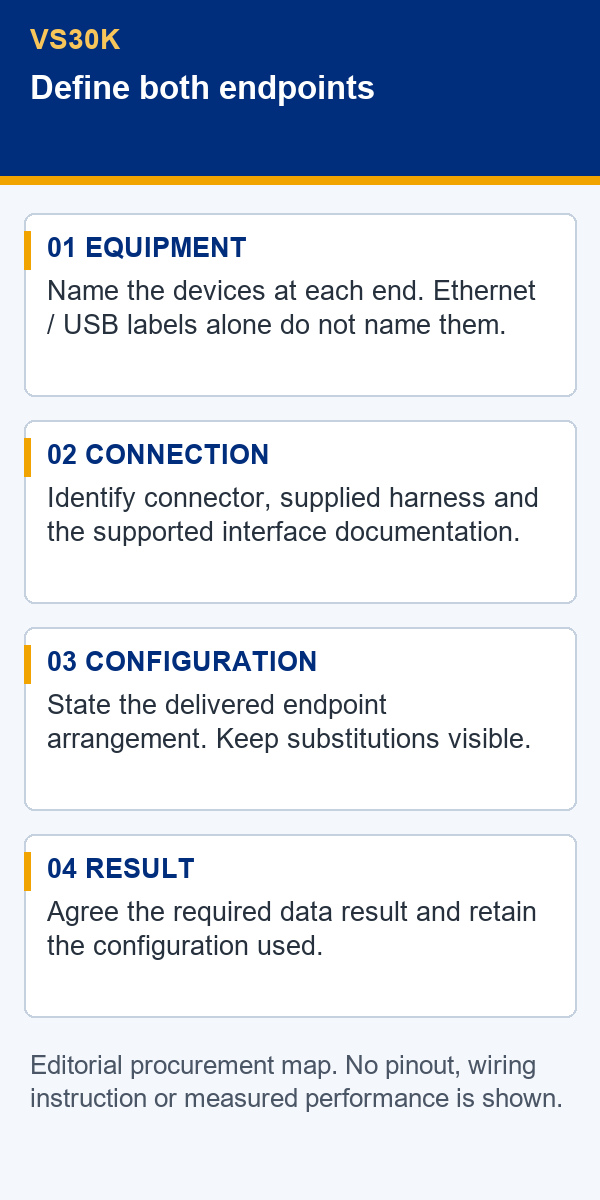
The supplier lists UART, S.Bus and LAN transparent transmission and a 16-channel S.Bus detail. Record the paths required by the buyer's project individually. A video path, a serial data path and a control-data path may involve different endpoint equipment or acceptance questions. A general “all interfaces included” line does not identify those relationships.
For each required path, name the two devices and the intended data category. Then record whether the supplier is responsible for the module configuration only or for a larger supplied combination. Where simultaneous use matters to the project, request a written statement covering the particular configuration. The list of interface names alone does not establish that every path operates together under the buyer's conditions.
Useful record format: path name; endpoint A device; endpoint B device; supplier configuration reference; software dependency; evidence required at handover.
This is a purchasing record, not a setup procedure. It gives the responsible supplier enough information to document the combination being offered. It also makes a missing dependency visible before the receiving team tries to accept an incomplete set.
The VS30K brochure lists dimensions of 57 × 47 × 18.1 mm, a weight of 63 g and an input-voltage range of 7–17 V. These details belong in the module record with the model and hardware revision. They provide a reference for component selection; they do not describe the envelope or weight of an installed assembly with cables, mounts and an enclosure.
The receiving team can compare the delivered item with the agreed identification record. The project designer needs additional documentation for connector clearance, mounting provisions and the complete supply requirement. Obtain those documents from the supplier rather than deriving them from the three dimensions. A voltage range does not by itself establish current demand, a suitable supply rating or the contents of a power accessory package.
Keep separate entries for the module, its harnesses and other included parts. If the project uses a buyer-supplied enclosure or supply, show that responsibility in the record. This prevents an omitted accessory from becoming an unexplained discrepancy during receipt and keeps any later substitution traceable to the component it affects.
Decide on the acceptance evidence while the offer is being reviewed. A receipt record should begin with the delivered module identifiers, endpoint arrangement, accessory item numbers and document revisions. Those are facts that can be compared with the order before any application-specific observation is considered.
For an agreed demonstration, record the identified source device, receiving device and application version, together with the supplier's configuration reference. State whether the receiving application shows the named video source. The parties should set the actual method and acceptance limits for their equipment. This article does not establish a test procedure, performance threshold or compatibility result.
A screenshot may support a narrow observation, but it cannot identify every component or show what the shipment contains. Retain the equipment identities and the observation record alongside it. When a supplier provides a report, check that its model and configuration references match the offer. A report for a different endpoint arrangement needs a separate explanation before it can support acceptance of the delivered version.
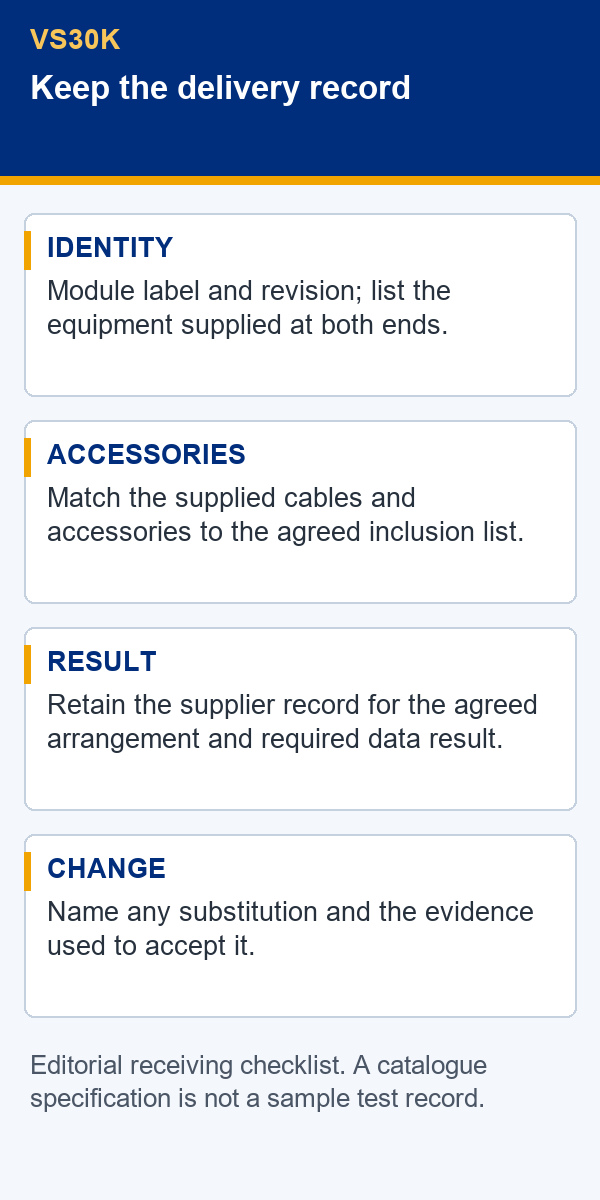
Suppose the packing list identifies the correct module but does not identify a harness promised in the offer. Record the missing reference, its effect on the agreed scope and the party expected to resolve it. A single “received” status would hide the difference between possession of the module and acceptance of the complete configuration.
Use a short exception entry with five fields: affected item, order reference, evidence available, resolution owner and current status. Give the entry a date. If a revised drawing or replacement accessory resolves it, retain the earlier entry and add the resolution reference. This makes the record useful when a spare is purchased months later.
Keep an observation's limits visible as well. An agreed display observation may be complete while another required data path remains unverified. State those results separately instead of extending one successful observation across the whole system. The person accepting the shipment should be able to see the remaining obligation without reading a chain of informal messages.
Use the VS30K Video Transmission Module product entry as the model reference, then attach the accepted endpoint schedule to the order. The next useful document is a supplier response that fills the missing fields for the exact configuration being supplied.
No. The brochure wording does not identify contact assignments or prove a standard socket type. Request the drawing for the delivered hardware revision and the reference for its supplied harness. Use the supplier's matching documentation for connection decisions.
The supplier lists it as a custom option. Replacement suitability depends on the named endpoint devices, supplied accessories and software requirements. Compare those records and obtain the supplier's written configuration statement before accepting it as a substitute.
They do not establish application compatibility. Put the actual application and version in the endpoint schedule and request a supported-combination statement. Any agreed demonstration should record those same identities so its result has a defined scope.
Only use an acceptance limit agreed for the delivered configuration with a defined measurement method. A catalog configuration label is not a measured result for the buyer's complete system. Request the applicable evidence before incorporating a performance figure into the contract.
Retain its identity and revision, the accepted endpoint schedule, connector and harness references, software dependencies, receipt observations and any open-item record. Those documents give a later replacement order a specific configuration to match.



 Tel: +86-13959965075
 Email: info@fpvdroneskit.com
 MP/WhatsApp: +86-13959965075
 Manufacturer Address:Quanzhou Valley Nanan Science and Technology Innovation Center, No. 89 Shijing Avenue, Shijing Town, Nanan City, Fujian Province