


Complete propulsion unit
The catalog mass is 960g excluding the propeller. This is the relevant unit-level figure for the mounted motor and ESC arrangement; it should not be replaced by the motor-only number when preparing an aircraft mass budget.
| Price | On request |
|---|---|
| Model | E8 |
| Product type | Integrated UAV propulsion system |
| Key hardware | 80A FOC |
| Input supply | Catalog recommended battery: 12–14S LiPo |
| Interface or platform | CAN; PWM signal input listed |
| Configuration | ESC firmware upgrade: Supported |
| Rated specification | Catalog maximum thrust, one axis: 18.5kg |
| Weight | Unit mass excluding propeller: 960g |
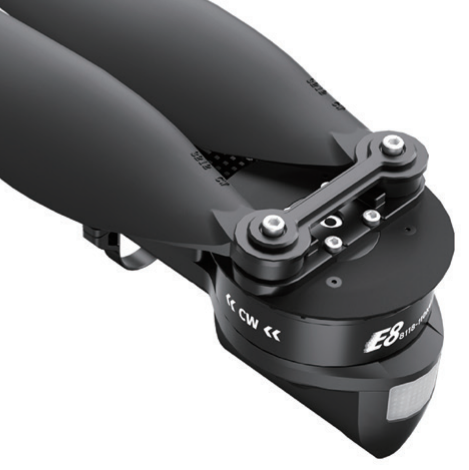
SIYI E8 is an integrated motor-and-ESC propulsion unit for larger civilian UAV platforms, including agricultural aircraft. Its 110KV motor is paired in the catalog with a 32 × 12-inch folding propeller. The listed arm-tube fit is 40mm, placing the physical installation in a different class from a compact FPV motor or a small camera-drone propulsion set.
When comparing units, put the arm diameter and propeller envelope ahead of the headline thrust number. Those dimensions determine whether the offered hardware is relevant to an existing frame and whether its service parts can be stocked alongside equipment already in use.
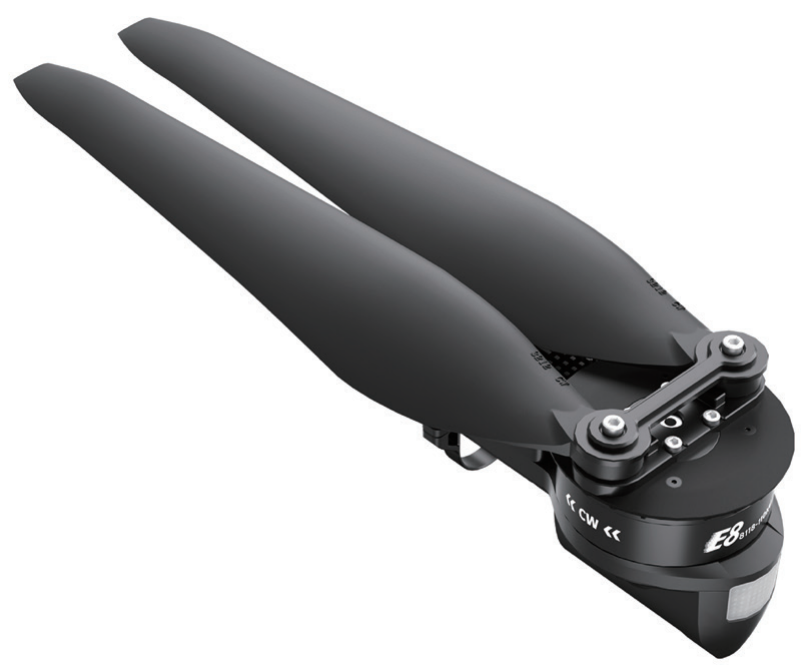
The catalog mass is 960g excluding the propeller. This is the relevant unit-level figure for the mounted motor and ESC arrangement; it should not be replaced by the motor-only number when preparing an aircraft mass budget.
The motor table lists 526g for the motor, while the propeller table gives 240g for the 32 × 12-inch propeller. Keep those separate component figures attached to their labels when comparing replacements or spare assemblies.
CAN communication and PWM signal input are documented. Ask for the control connection and harness required by the proposed flight controller, with the motor-unit revision identified on the offer.
The ESC is described as an 80A FOC unit. Its tabulated continuous-current figure is 80A with good heat dissipation, and its 150A peak is limited to three seconds. These are different conditions. A short peak figure should not be used as a continuous thermal rating when comparing an alternative ESC or power arrangement.
The supplied catalog recommends a 12–14S LiPo platform and gives 63V as the ESC maximum working voltage. Confirm the complete voltage envelope of the proposed supply against the offered revision. A cell-count label and a maximum-voltage limit each convey part of that electrical specification.
The E8 maximum-thrust figure is 18.5kg per axis. The catalog's recommended takeoff-weight band is also stated per axis, at 5–8kg. Neither statement is an independent payload rating for a finished aircraft. Ask which exact motor, ESC and propeller combination the supplier is quoting before comparing the numbers with another propulsion family.
For an agricultural fleet or a replacement order, provide the frame's arm dimensions, existing E8 identification and the preferred propeller arrangement. List the required unit count and the number of spare propellers, hubs or other service parts separately. Include the flight controller and available control interface so that the supplied lead arrangement can be checked.
Request the environmental specification for the exact assembly and its connectors if exposed agricultural work is part of the requirement. Keep any component protection code attached to the part it describes, and identify the motor-unit revision and the intended maintenance conditions on the offer.
No. The catalog identifies 960g as unit mass excluding the propeller and lists the propeller separately at 240g.
It is a three-second peak figure. The separately listed continuous rating includes a good-heat-dissipation condition.
Provide the existing motor and ESC markings, arm dimensions, propeller type and connector photographs. That gives a more precise basis than the aircraft brand alone.
| Catalog maximum thrust, one axis | 18.5kg |
|---|---|
| Catalog recommended takeoff weight, one axis | 5–8kg |
| Catalog recommended battery | 12–14S LiPo |
| Arm-tube diameter | 40mm |
| Unit mass excluding propeller | 960g |
| ESC model | 80A FOC |
| Maximum working voltage | 63V |
| ESC continuous current | 80A with good heat dissipation |
| ESC peak current | 150A for 3 seconds |
| Communication | CAN; PWM signal input listed |
| Motor KV | 110rpm/V |
| Motor mass | 526g |
| Propeller dimensions | 32 × 12in |
| Propeller mass | 240g |
| Catalog rated input power | 1042W |
| Catalog rated output power | 908W |
| Power-cable length | 1000mm |
| Signal-cable length | 1100mm |
| PWM signal voltage | 3.3V / 5V |
| PWM pulse range | 1050–1950μs |
| PWM frequency | 50–500Hz |
| ESC firmware upgrade | Supported |
| Digital throttle | CAN throttle |
| Motor stator | 81 × 18mm |
| Motor slot/pole configuration | 36N40P |
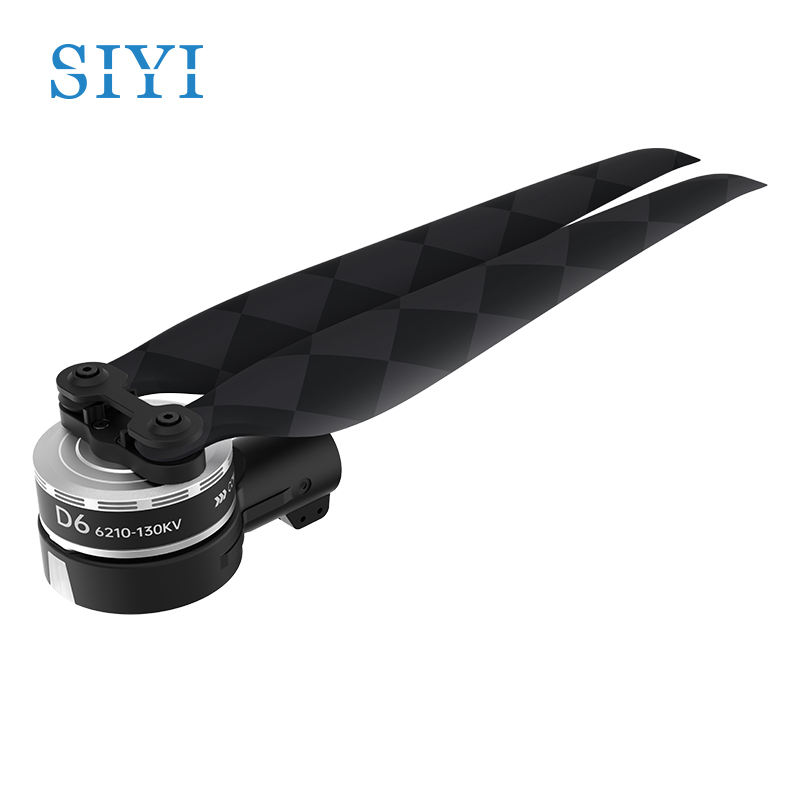
Compare SIYI D6 UAV propulsion options: 130KV motor, FOC ESC and documented straight or folding 22-inch propellers with distinct masses....
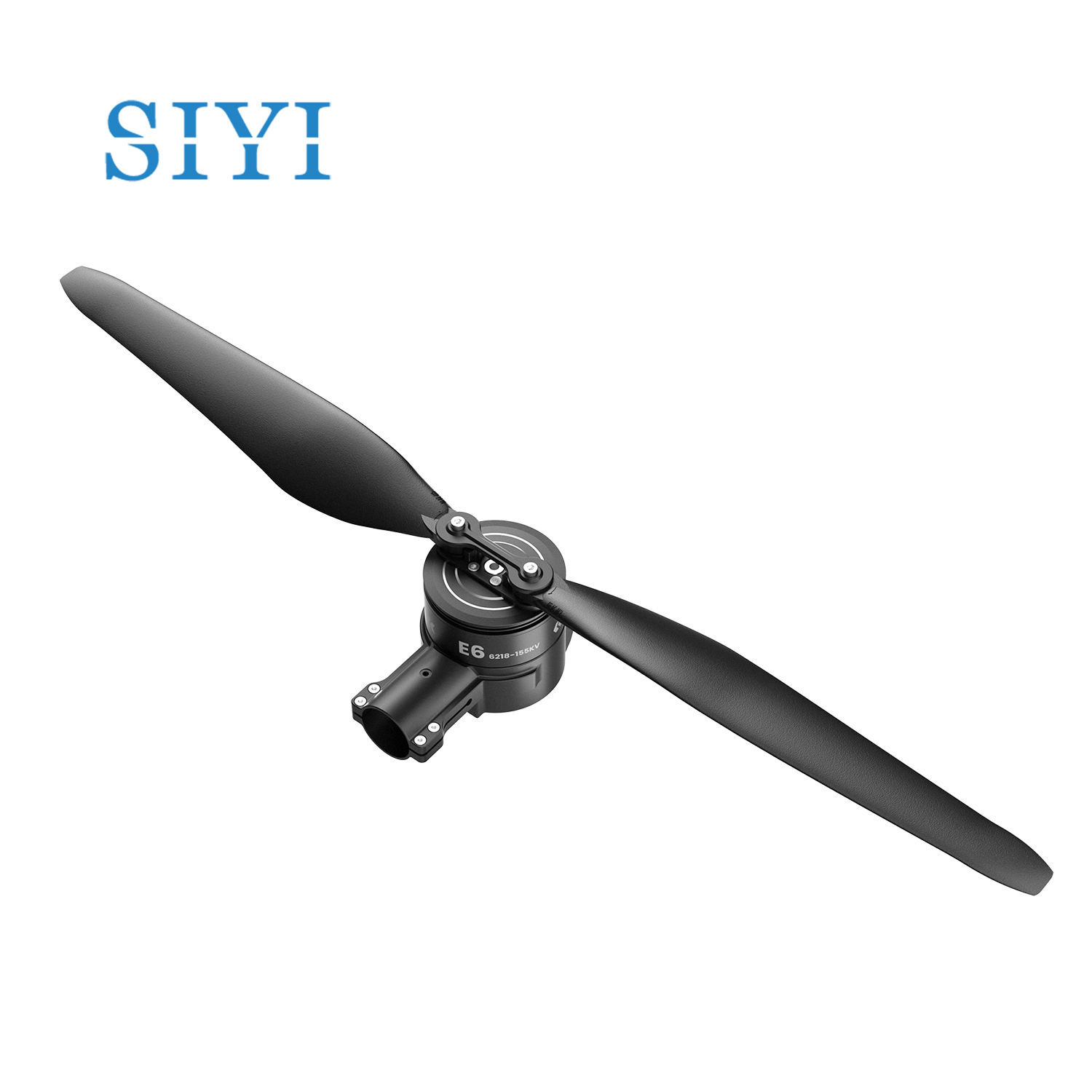
Select the SIYI E6 integrated propulsion unit for an industrial UAV: 30mm arm fit, 155KV motor, CAN control and a 24 × 9-inch propeller....
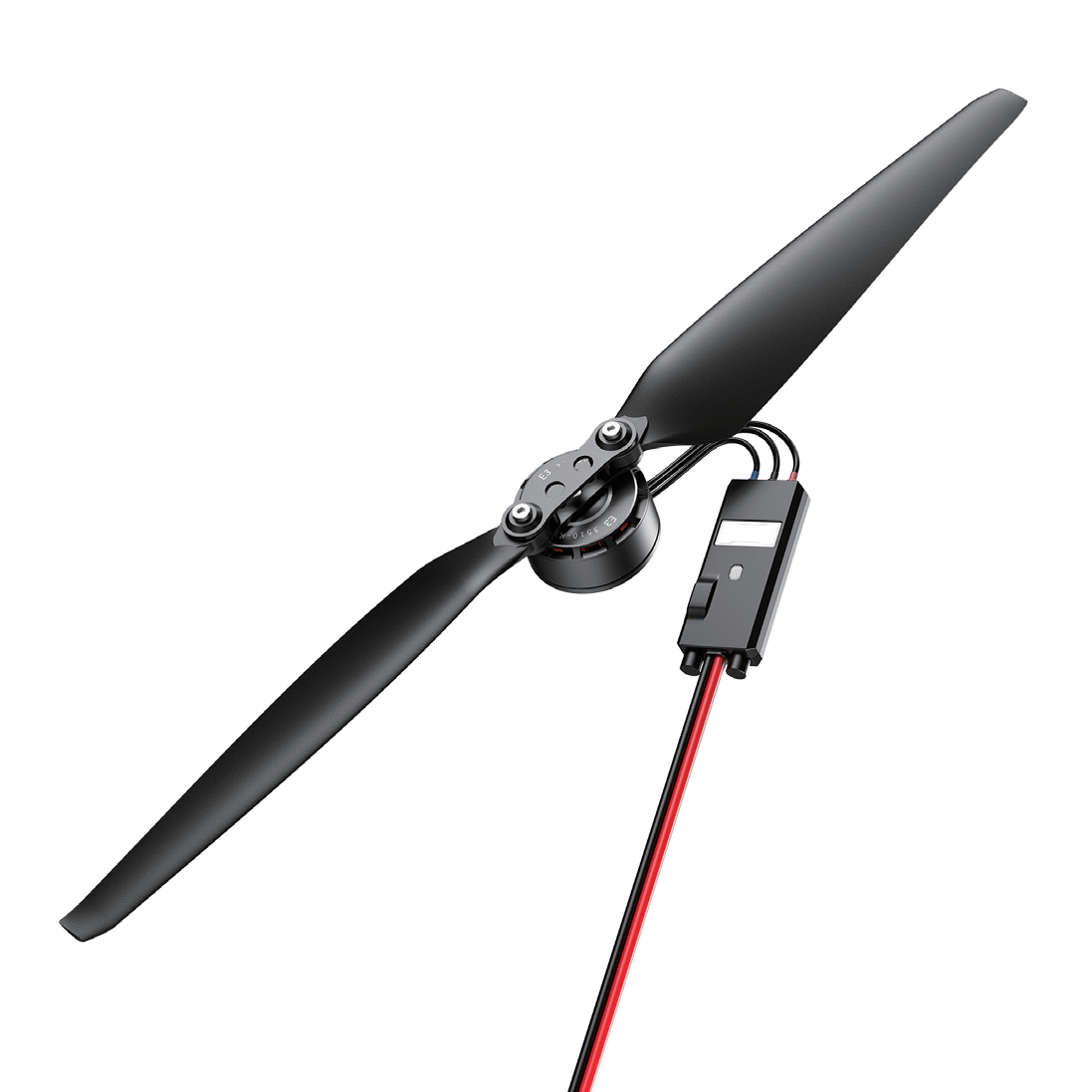
Compare the SIYI E3 drone propulsion set: separate motor and FOC ESC, 6S platform, CAN/PWM control and a 15.5-inch folding propeller....

 Tel: +86-13959965075
 Email: info@fpvdroneskit.com
 MP/WhatsApp: +86-13959965075
 Manufacturer Address:Quanzhou Valley Nanan Science and Technology Innovation Center, No. 89 Shijing Avenue, Shijing Town, Nanan City, Fujian Province