Author:Military Drone Manufacturer TIME:2026-10-10
A thermal picture from the GC30 Dual Sensor Gimbal Camera does not establish that temperature measurement is included. The supplier brochure lists a 40× optical-zoom visible camera, a 640×512 LWIR thermal imager and optional IR temperature measurement. For a civil FPV drone or UAV inspection project, decide whether the review needs identifiable visible detail, a thermal picture, or recorded temperature results. Then ask for the corresponding output from the offered configuration. Keep the two imaging channels separate from the additional range sensor and from the measurement option. A displayed thermal scene and a saved video each answer only part of that request.
The GC30 brochure describes a visible camera with optical zoom and an uncooled LWIR thermal imager on a three-axis gimbal. In this article, dual sensor means that visible-and-thermal imaging pair. EO/IR gimbal camera describes the same two image types. The delivered configuration determines which optional measurement functions and output arrangements are available. Keep each function in its own record instead of treating the product name as a full description, and identify the camera revision used for every example the supplier provides.
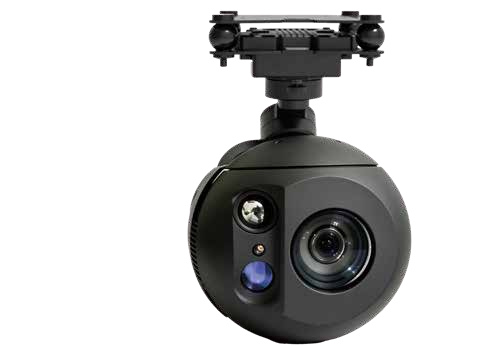
The same page also lists a laser rangefinder. The phrase dual sensor should therefore be explained as the two imaging sensors, not exactly two sensors in the whole product. Distance sensing is a different function from the visible and thermal images discussed here. Keeping those names separate avoids treating one feature's specification as a description of another channel.
Ask the supplier to identify the hardware revision and imaging configuration used for any sample. The brochure is a model reference. A sample record tells the reviewer which delivered arrangement produced the output being examined. This distinction matters when the offer includes an option, a different software revision or an output configuration that is not visible in the product photograph.
Start the visible-image review with something that needs to be identified. For civil infrastructure inspection, that might be a marking on equipment, a surface feature or an area that a reviewer needs to recognise in a report. Describe the detail and the file the reviewer will use, rather than asking only for the camera's largest zoom figure.
The 40× optical-zoom specification belongs to the visible camera. It does not describe the thermal imager's optical zoom, and it does not establish how much useful detail will be present in a particular inspection file. Request an example of the intended visible output from the offered configuration. Have the supplier identify the settings and conditions relevant to interpreting that example.
Review the original image or recording at the stage where the inspection team will actually use it. A small preview in a presentation may hide detail available in the file, while a heavily enlarged screenshot may look more informative than the underlying image. Keep the original separate from crops or annotated report illustrations. A review copy can help explain a finding without becoming the only remaining evidence of the camera output.
Agree what counts as an identifiable detail before reviewing the example. The reviewer might need to read a specific equipment label or recognise a feature already marked in a reference photograph. Attach that reference to the request and describe the intended viewing size. The supplier can then provide a relevant example instead of choosing an attractive scene that does not answer the inspection question. Keep any observation tied to that example; one readable label does not establish a general distance or resolution guarantee.
The brochure lists a 640×512 uncooled LWIR detector. This is a thermal-sensor reference, not a promise that every delivered stream, screenshot and stored file has that same resolution. The video-output and storage entries describe other parts of the output path. Ask which channel is carried by the selected output and what the recipient actually receives.
A thermal picture can be a requirement in its own right. An inspection team may need an identifiable thermal view of an area for later review, without requiring numeric temperature results. In that case, describe the scene record, the destination used to view it and the files to be retained. Do not add a temperature requirement merely because a coloured thermal picture appears in a demonstration.
Keep the sample's display arrangement clear. The source used here does not establish image fusion or picture-in-picture as an included function. Request confirmation if either layout is important to the review. A supplier's edited demonstration can place images side by side without proving that the ordered camera produces that layout itself. Preserve the distinction between a camera output and a presentation made from several outputs.
The descriptive paragraph explicitly calls IR temperature measurement optional. Treat that wording as a configuration question to resolve before a temperature result becomes part of the order. Ask whether the offered unit includes the option, how the supplier identifies it and which application or output delivers the result. The presence of the thermal imager alone does not answer those questions.
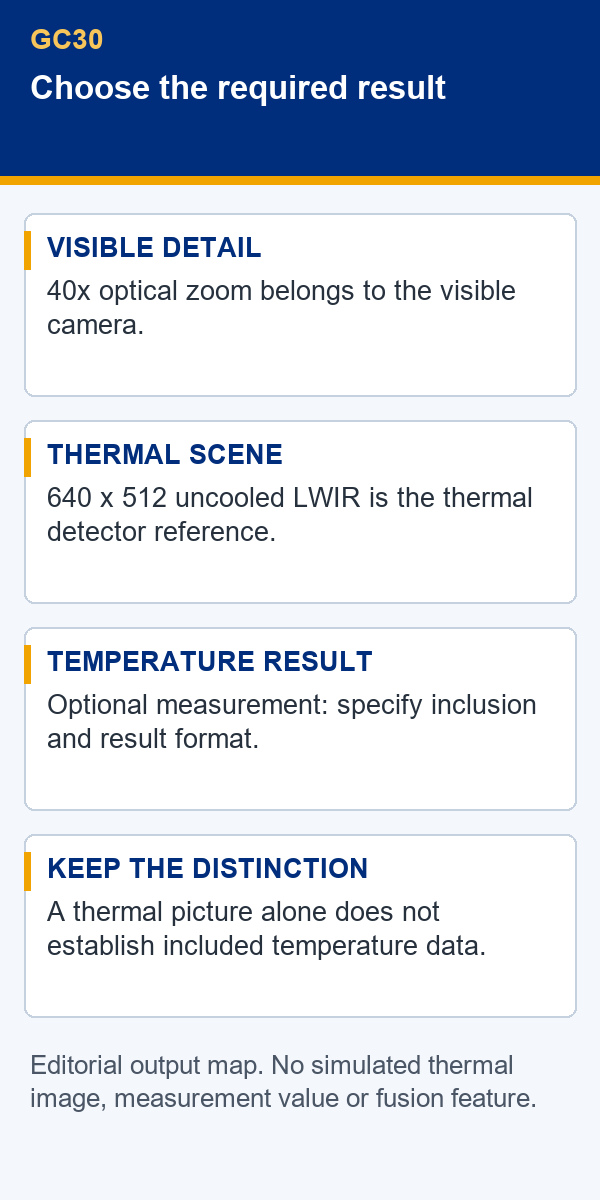
Be specific about the deliverable. Do you need values visible during a review, values retained with a file, or a separate data export that another system can read? These are questions for the supplier, not capabilities established by the source page. Name the requested result and ask for an example from the proposed configuration. If only a screen value is demonstrated, do not assume the saved video retains usable measurement data.
Ask the supplier to state the conditions and documentation supporting the offered measurement result. This article does not provide a temperature accuracy, measurement range or assessment method. Those claims must match the option being supplied. A procurement team can keep the question open until the result format and its limits are clear, instead of accepting a general statement that the camera measures temperature.
The GC30 table names HDMI and IP video, TF-card storage, JPG images and MP4 recordings. It also lists PWM, S.Bus, UART, TCP and UDP control methods. These entries help identify interface families for a proposed system. They do not settle which image channel is visible at a particular destination or whether a stored file contains optional temperature data.
| Required result | Source reference | Question for the sample |
|---|---|---|
| Identifiable visible detail | 40× optical-zoom visible camera | Does the original visible file show the detail the reviewer needs? |
| Thermal scene record | 640×512 LWIR detector | Which output and saved file carry the thermal channel? |
| Temperature-data result | Optional IR temperature measurement | Is the option included, and what result can the reviewer retrieve? |
A file extension answers how a file is packaged, not every question about the information inside it. Ask the supplier to identify the channel, output configuration and any available metadata in the actual sample file. Do not label a file radiometric just because it came from a thermal camera or because a temperature number appeared elsewhere in the demonstration.
For a review that needs both channels, retain each original with a clear channel label, sample identity and scene reference. Describe how the supplier associates the visible and thermal outputs. The source does not establish synchronised capture, geometric alignment or a fused image. A record can identify related files without making any of those claims.
A scene reference can be an asset identifier, a named inspection area or the supplier's description of the example. Use the same reference in the review notes and record which received file belongs to each channel. If the supplier supplies a combined presentation, ask whether the individual originals are available when the project requires them. A presentation may be enough for a preliminary discussion, while a report reviewer may need separate files. Decide that requirement explicitly instead of treating the combined presentation as proof of a camera layout feature.
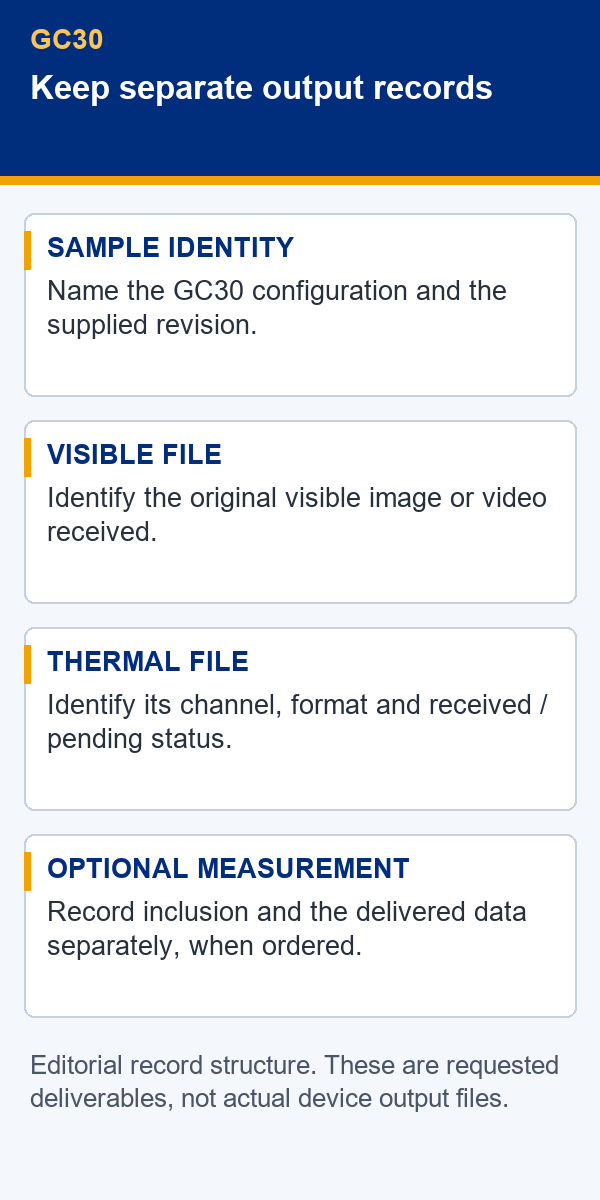
Keep the files received from the supplier and note which ones were used in the review. If a report contains a crop, palette adjustment or annotation, mark it as a review copy and retain the source file separately. A later reader should be able to find the original that supports the report without mistaking an explanatory overlay for data delivered by the camera.
Record absent outputs explicitly. A visible file may be available while the thermal original is still outstanding; the image outputs may be complete while the optional temperature-data requirement remains unresolved. Those are separate review states. Maintaining that distinction lets the supplier answer the missing requirement without repeating work that is already supported by the sample.
No. It describes the visible and thermal imaging pair here. The supplier also lists a laser rangefinder, which is a separate sensing function.
The source assigns it to the visible camera. It does not establish 40× optical zoom for the LWIR channel.
No. The descriptive paragraph calls IR temperature measurement optional. Confirm its inclusion and the result format for the offered unit.
The format label alone does not establish those contents. Request the actual file and the supplier's description of any measurement data it carries.
The supplied material does not settle fusion, picture-in-picture, synchronised capture or alignment. Ask for the required behavior to be demonstrated on the ordered configuration.
Give each requested output a question it needs to answer. Visible detail might support identification of a surface feature; a thermal scene might support an image review; optional temperature data requires an identified measurement deliverable. Keep the answer and any untested item attached to that output, rather than grading the entire camera with one pass mark.
The GC30 Dual Sensor Gimbal Camera product page provides the model references for this discussion. Request the original visible and thermal files required by your project and state separately whether temperature data is needed. An offer that identifies those outputs gives the inspection reviewer something concrete to examine, while keeping unconfirmed options out of the accepted result.

 Tel: +86-13959965075
 Email: info@fpvdroneskit.com
 MP/WhatsApp: +86-13959965075
 Manufacturer Address:Quanzhou Valley Nanan Science and Technology Innovation Center, No. 89 Shijing Avenue, Shijing Town, Nanan City, Fujian Province