Author:Military Drone Manufacturer TIME:2026-11-08
Select the SIYI ZT6 thermal gain range around the surface temperatures your inspection needs to examine, rather than always choosing the widest published range. SIYI lists high gain from −20 to +150°C and low gain from 50 to +550°C, with different stated accuracy figures. A cooler building surface and a hot industrial component can therefore call for different settings. The overlap does not make both modes interchangeable for every observation. First define the likely scene, the temperature question and the required saved result, then evaluate the supported mode on the supplied camera and software. A colourful image alone does not establish a reliable temperature measurement.
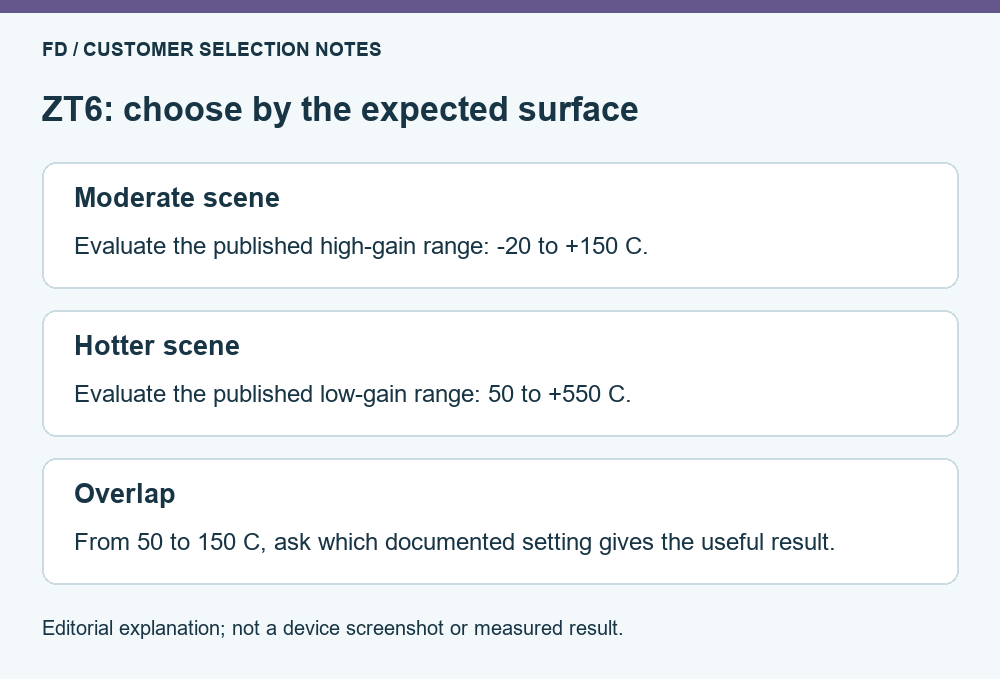
Manufacturer-listed scene range: −20 to +150°C. Consider the range against the expected surfaces.
Manufacturer-listed scene range: 50 to +550°C. A higher upper limit answers a different requirement.
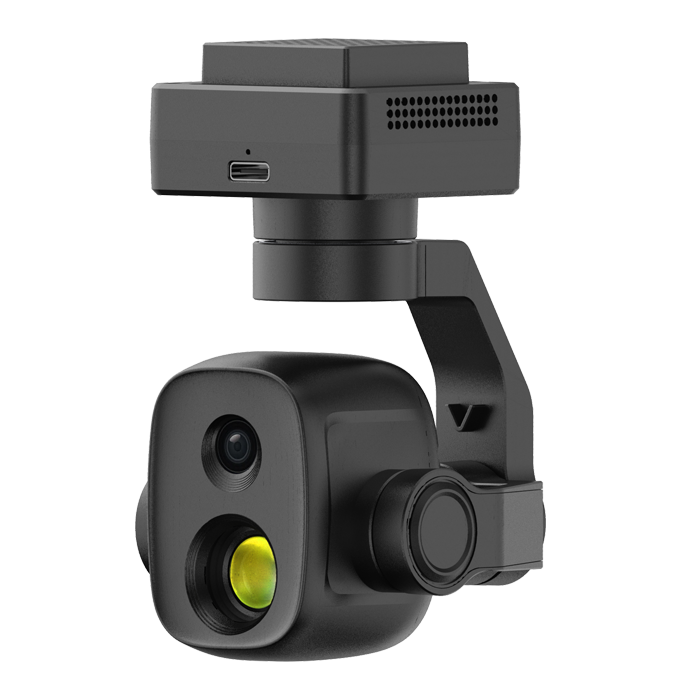
The ZT6 specification lists a 640 × 512 thermal detector and a fixed 13 mm F1.0 thermal lens. Its gain settings describe temperature ranges, not a change in detector pixel count or a new optical zoom. The useful comparison is between the scene-temperature requirement and the measurement capability listed for each mode.
| Published ZT6 thermal setting | Listed temperature range | Listed accuracy entry | Buying implication |
|---|---|---|---|
| High gain | −20 to +150°C | ±2°C over the stated range | Evaluate when the required surfaces lie within this range. |
| Low gain | 50 to +550°C | ±5°C over the stated range | Evaluate when a hotter scene requires the higher upper limit. |
These are manufacturer specification entries, not FD calibration results. The table should not be turned into an unconditional accuracy guarantee for every distance, surface or environment. It does show why quoting only “up to 550°C” hides information that a customer needs when selecting a configuration.
A thermal inspection may begin by locating an unusual pattern. A reviewer might want to compare adjacent roof areas or identify a component that deserves closer examination. A different job may require a temperature value to support a defined maintenance decision. Both use thermal images, but they do not ask the same thing of the camera, software and reporting method.
State the expected result in ordinary language. “Show whether this part differs from neighbouring parts” is a pattern question. “Provide a defensible surface-temperature result under stated conditions” is a measurement question. The second requires more information about the surface and method than a camera model number or gain setting provides.
ZT6 lists point, full-image and selected-box measurement modes. That makes the location and scope of a displayed value relevant. A maximum across a whole image can refer to a different object from the particular component a customer intends to inspect. The buyer should see how the required area is selected in the actual viewing application.
Building-envelope review: the customer expects moderate surface temperatures and wants to compare areas of the same roof under a documented inspection method. High gain is a candidate because its listed range covers the intended surfaces. That is a starting point for evaluation, not evidence that every roof anomaly indicates a defect.
Hot industrial equipment: the customer knows that the relevant component may exceed the high-gain upper limit. Low gain becomes a candidate for that hotter scene. The operator still needs a permitted viewing position, an appropriate surface-temperature method and a result that fits the customer's analysis process.
The scenarios are editorial examples, not FD case histories. They help a buyer explain why a range matters without pretending to diagnose an unknown asset from a specification. A camera purchase does not replace the inspection method or the knowledge needed to interpret the result.
The two published ZT6 ranges overlap from 50 to 150°C. A surface inside that overlap is not automatically a reason to choose low gain just because it has a larger upper limit. Ask which setting gives the useful result for the scene and measurement requirement while remaining within the documented operating conditions.
A representative sample should identify the gain setting, the relevant surface and the selected measurement area. If two settings are compared, keep the subject and conditions comparable. Otherwise changes in lighting, surface condition or viewpoint can dominate the difference being attributed to gain. A mode label should accompany the image rather than being reconstructed from its colours.
Include ordinary background surfaces in the sample rather than filling the frame with only the hottest feature. The customer can then judge whether the selected range supports the broader review or whether different observations need separate captures. When a job includes both moderate surfaces and a much hotter component, explain both requirements to the supplier. One advertised upper limit is an incomplete description of that mixed scene.
It is also useful to ask what the viewing software shows when part of the scene falls outside the chosen range. Do not assume that an extreme displayed colour proves a specific temperature. The supplied software's range and status information needs to be understood before a reviewer relies on values near a mode boundary.
A palette changes how thermal information is represented to the viewer. Display scaling changes how a range of values is spread across that presentation. Selecting the sensor's gain range is another decision. A white-hot appearance is not proof that the camera is using high gain, and a colourful presentation is not itself proof of calibrated temperature data.
Keep the image useful for its audience. A maintenance reviewer may benefit from the visible-light view alongside the thermal view to understand which asset is being examined. ZT6 includes both visible and thermal imaging, but that does not mean every exported file carries both views or every desired temperature field. Ask for the output that the reporting task needs.
The thermal detector remains native 640 × 512 in this model specification. Digital enlargement does not add independent detector samples. Likewise, the visible camera's recording modes do not transform the thermal channel into a 4K detector. These distinctions prevent a quotation from combining different channels into a misleading single number.
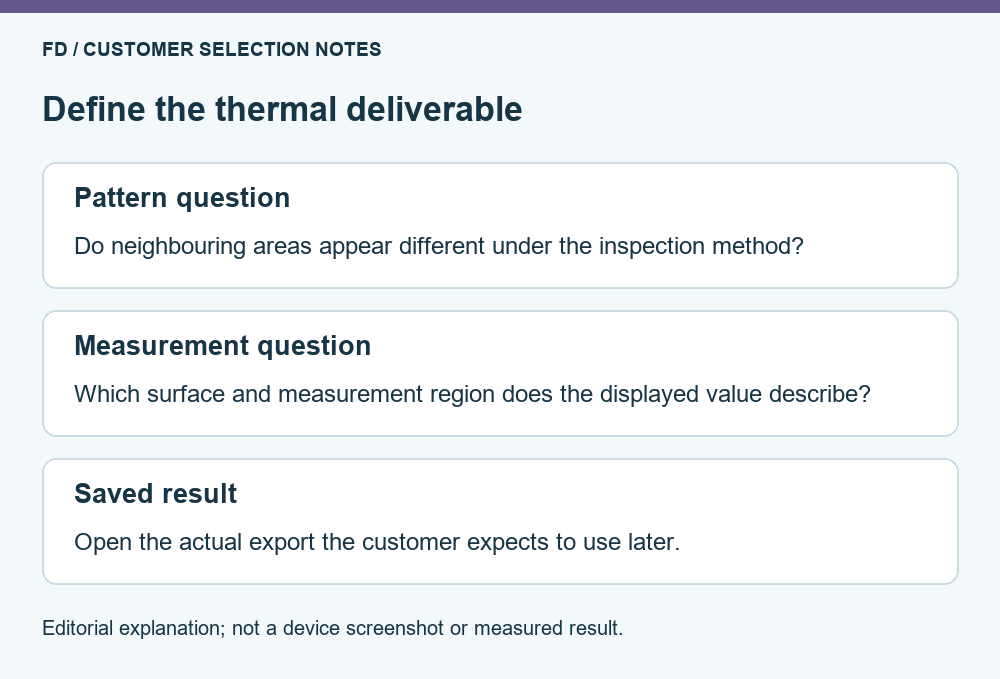
A live displayed reading can help an observer during a job, while a later analyst may need files that preserve the information required by a particular process. A screenshot containing a temperature label is not automatically a file from which temperatures can be recalculated. Decide whether the purchase needs visual evidence, a displayed reading or a specified analysis-data export.
Request a short sample set from the proposed ZT6 configuration: a relevant visible image, a thermal image with the selected gain and measurement region identified, and the actual file intended for later review. Open that final file in the intended application. This is a bounded evaluation of the proposed result, rather than an assumption based on a sensor specification.
Preserve the conditions that affect interpretation, including the relevant surface, viewpoint and selected settings. Those details support a meaningful review, but should not overwhelm the article or quotation. The buying decision remains whether the supplied package can produce a useful and understandable result for the defined task.
If a maintenance team will compare visits over time, agree on the required consistency of framing and measurement regions before choosing the package. A different coloured patch in a later image is less informative when it refers to another part of the asset or a different presentation scale.
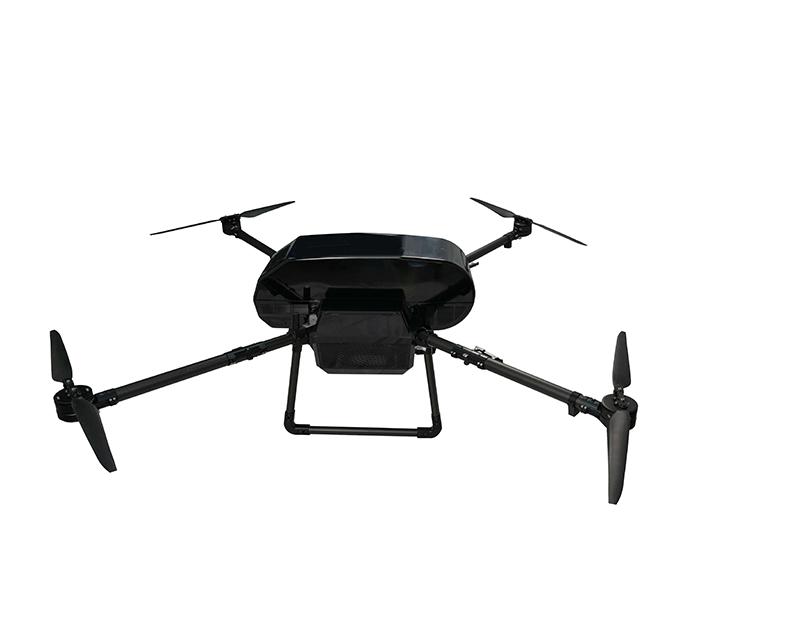
Explain the expected temperature span, type of surface, required report output and intended aircraft when requesting a camera. These details help separate an ordinary observation requirement from one that needs a particular measurement or export capability. The supplier can then discuss the appropriate camera and software configuration rather than simply quoting the highest temperature number.
Installation still matters. ZT6's published weight differs with and without the anti-vibration board: SIYI lists 177 g excluding it and 197 g including it. Use the appropriate assembly scope when checking the aircraft package. The gain choice itself does not determine whether a complete mounting and video arrangement will fit the platform.
For the current product and an inspection-specific discussion, review the SIYI ZT6 dual-sensor camera configuration from FD. Include a representative temperature question and the file your customer expects to receive, rather than asking for an unsupported universal “best thermal setting.”
It addresses a hotter published range, not every inspection better. The expected scene and required result should decide which range to evaluate. Keep the corresponding accuracy entry with the range.
The listed detector remains 640 × 512. Gain-range selection and the detector's spatial sampling describe different properties. Do not sell the mode switch as additional thermal pixels.
No reliable mode identification follows from palette alone. Use the actual camera or application setting and retain that information with any comparison sample. Colours can be changed independently of the inspection question.
They are manufacturer entries under their applicable conditions. A real surface-temperature result also depends on the inspection method and scene. Do not treat the brochure figure as an FD field-test guarantee.
Request the actual export used by your reviewer, with gain and measurement area identified. Pair it with enough visible context to locate the surface. This reveals more than an unlabelled thermal screenshot.
Source basis: SIYI ZT6 current specification and User Manual v1.3, checked 21 October 2026. The examples illustrate camera selection; no FD thermographic survey, calibration or defect diagnosis is claimed.

 Tel: +86-13959965075
 Email: info@fpvdroneskit.com
 MP/WhatsApp: +86-13959965075
 Manufacturer Address:Quanzhou Valley Nanan Science and Technology Innovation Center, No. 89 Shijing Avenue, Shijing Town, Nanan City, Fujian Province