Author:Military Drone Manufacturer TIME:2026-11-11
Choose a VS30K package using the traffic required by the intended camera views, rather than a resolution label or the largest throughput figure in a product family. Start with each real compressed video stream, add the other traffic sharing the proposed path and compare that demand with evidence for the delivered arrangement. VS30K is listed with Ethernet, UART, SBUS and USB interfaces, but those names do not establish the usable video capacity of every configuration. A practical bandwidth budget identifies what must travel together and which viewing tasks actually need it. It helps avoid buying capacity that is unnecessary or assuming capacity that has not been demonstrated.
A camera may offer more than one stream, and an inspection system may include more than one image channel. The first question is not how many pixels the camera advertises. Ask which views the operator or reviewer must receive at the same time, at what useful image settings and through which supported arrangement. An original recording saved at the camera does not consume link capacity merely by existing there.
For example, a team may want a general live preview while retaining a higher-detail file locally for later review. That is different from requiring two full-detail live streams at once. A buyer who writes both requirements as 4K video can hide a large difference in transport demand. Keep the saved-file requirement separate from the actual traffic sent toward the viewing position.
The current VS30K reference lists several interface families. It does not make the rate of a particular camera stream known. Obtain that stream's actual configuration and a representative observation from the camera supplier. Where the camera supports alternate profiles, ask which one was used for the proposed link demonstration rather than assume its largest advertised image mode was transmitted.
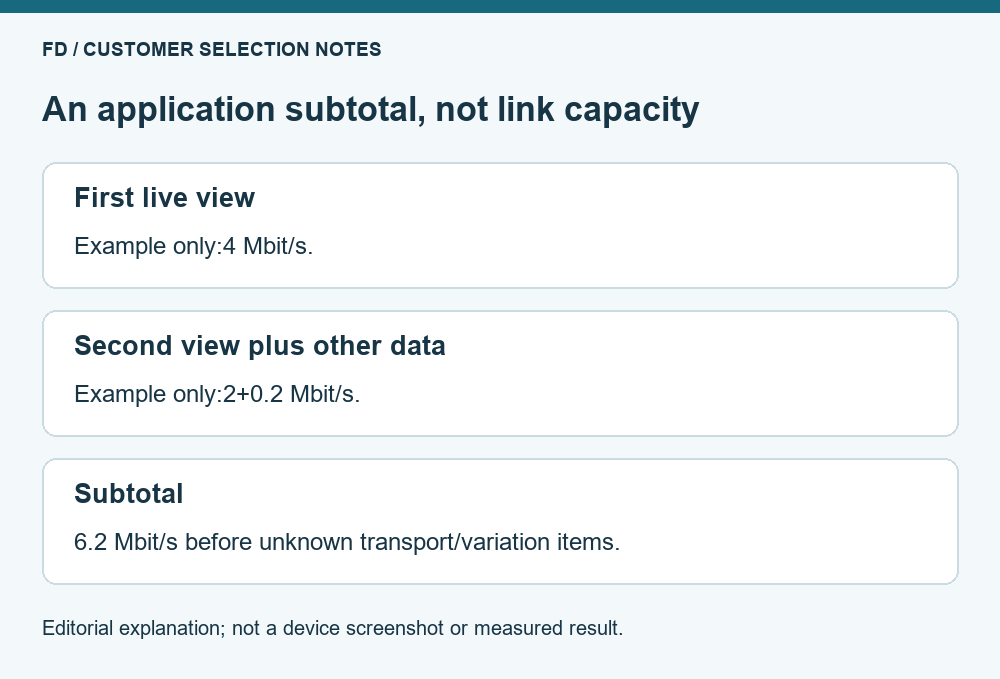
| Traffic item in an illustrative purchase | Assumed application rate | Why it belongs in the budget |
|---|---|---|
| General visible-camera preview | 4 Mbit/s | Required live picture for the stated task |
| Second selected view | 2 Mbit/s | Needed only if it must travel simultaneously |
| Other application data | 0.2 Mbit/s | Shares the same proposed path in this example |
| Application-rate subtotal | 6.2 Mbit/s | Sum before transport overhead or a project allowance |
These are invented planning inputs, not measured VS30K capacity or recommended camera settings. The arithmetic is simply 4 + 2 + 0.2 = 6.2 Mbit/s. The subtotal is not a minimum supported link rating: protocol overhead, rate variation and the system's actual behavior still need to be considered by the integration owner.
Now remove the second live view if the task does not need it. The assumed subtotal becomes 4.2 Mbit/s. That change comes from a buying decision about required information, not a hardware performance improvement. It can be more useful to eliminate an unnecessary simultaneous view than to purchase a different package merely to carry traffic nobody needs to watch.
Compressed video does not always produce the same traffic for every scene. Axis's current bitrate-control white paper explains variable, average and maximum-rate approaches in network video. Its discussion supports asking how a stream behaves over changing scenes; it does not identify VS30K's capacity, select a codec for this module or guarantee any specific reduction in traffic.
A nearly static wall and a view containing complex movement can create different encoding demands at the same nominal image dimensions. A screenshot of a rate during one quiet moment is therefore a weak basis for a complete purchase. Ask for representative conditions that reflect the actual civil inspection task, while staying within the supplied camera's supported settings.
Maximum-rate control and average-rate targets also answer different questions. An average figure can help describe a longer interval, while short-term demand may still matter to the transport path. A buyer should ask which type of figure a supplier is quoting and over what observation interval. Do not compare a camera's average directly with an unexplained peak link number and call the difference guaranteed spare capacity.
Keep bits and bytes distinct. A rate expressed in Mbit/s is not the same number as MB/s. Also ask whether the quoted throughput represents application data, a transport measurement or a radio-level figure. Those quantities describe different boundaries. The useful comparison is between the traffic the proposed system sends and the capacity demonstrated at an appropriate matching boundary.
VS30K's supplier material associates different throughput entries with different interface arrangements. The current public product description sensibly leaves delivered performance to exact configuration evidence. Do not take the largest entry and apply it to every Ethernet, USB or mixed arrangement. Ask the supplier to identify the exact configuration used in the supporting result.
Likewise, a product name or distance-class label does not define usable capacity at the customer's site. This article provides no link-distance, frequency-selection or radio-setting prescription. The procurement question is narrower: can the supplied, authorized arrangement carry the required application traffic under its stated conditions? The answer needs the correct equipment and relevant evidence, not a borrowed maximum from another row.
A budget normally needs room beyond a simple sum of expected application rates. The appropriate allowance depends on the system, how the streams vary, additional protocol traffic and the acceptance criteria. There is no verified universal percentage in this article. Inventing one would make an apparently precise total less honest rather than more useful.
Instead, keep three lines visible: the required application traffic, the transport or variation items still to be characterized and the capacity result for the actual offered package. Ask the integration owner to explain the allowance used in their comparison. That approach exposes an unresolved input rather than hiding it inside a rounded figure that nobody can trace.
The same discipline applies when another application shares a connection. Determine whether it actually traverses the same path. A local file copy at the review computer may be unrelated to the live link; a simultaneous remote stream may be relevant. The budget should include real shared demand, not every task performed anywhere in the project.
Lowering a video rate can affect the picture, so begin with the observation task. A general preview and a small-detail assessment can need different useful image settings. Ask the camera supplier for representative source material at the proposed profile, then decide whether the resulting live picture answers the viewer's question. Do not call a lower rate an improvement simply because it fits a spreadsheet.
One option may be to send a general live preview and save detailed original files at the camera, where supported. Another may be to select one view at a time instead of sending two simultaneously, if the offered system supports that workflow. These are candidate choices to discuss; neither is asserted as a built-in VS30K function.
The preferred result is enough useful information at the viewing position with a supported complete arrangement. If a reduced profile loses the detail the team needs during the session, it is the wrong economy. If a high-rate second view serves no actual task, it may be an unnecessary requirement. Let the comparison show both the picture and the traffic that produces it.
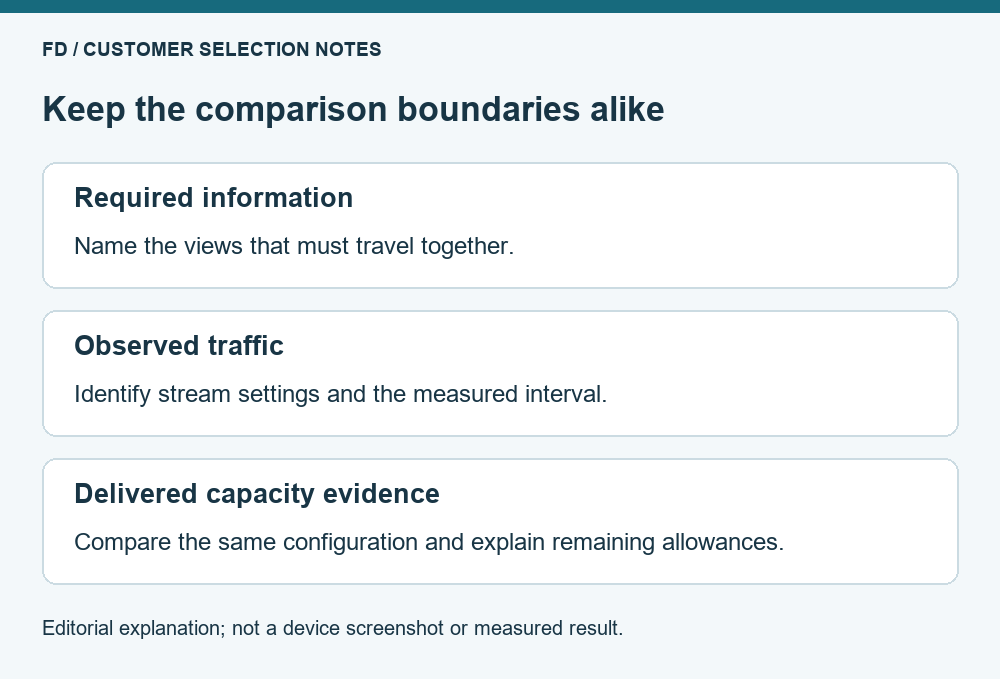
Provide the supplier with the camera or camera models, the intended stream settings and the views needed together. Ask them to identify all equipment in the offered arrangement and the boundary at which traffic or capacity was observed. A demonstration with one stream cannot settle a purchase that requires two simultaneous streams plus other shared data.
Review the result in the actual intended viewer, using representative ordinary scenes. Keep the stream settings, observed traffic interval and picture together. No single throughput number proves the quality of the visible result, and no attractive screenshot proves that the link has sustained the proposed workload. These are complementary pieces of evidence for a purchasing decision.
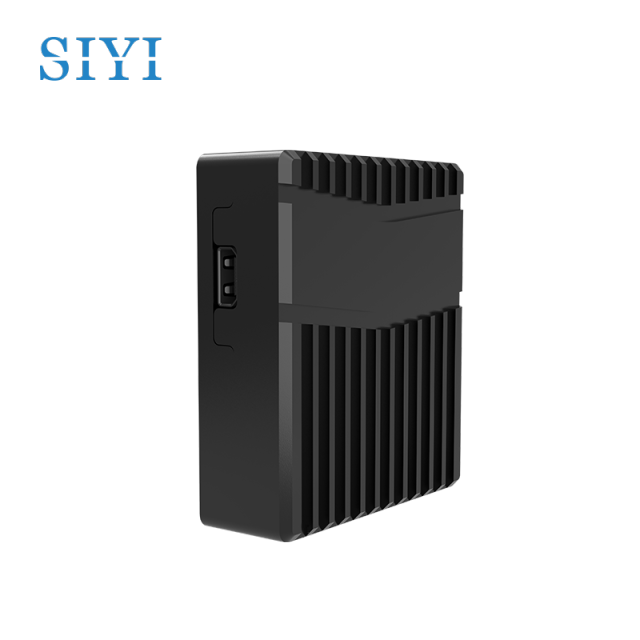
For the currently listed role and an exact-package enquiry, review VS30K and ask FD to evaluate the required camera-view budget. Include the actual application traffic subtotal and the remaining unknowns. A supplier can then explain a configuration in terms of the useful result, rather than defend an ambiguous headline number.
No. Image dimensions alone do not specify the compressed stream rate. Codec, profile, frame rate, scene and rate-control behavior contribute. Obtain the actual stream settings and relevant observations for the camera being purchased.
That produces an application subtotal, but it may omit variation and transport overhead. Keep those additional inputs visible and have the integration owner justify the comparison with evidence for the delivered package.
Do not assume that. The supplier material distinguishes configurations. A supporting result must identify the actual interface arrangement and measurement boundary used for the proposed equipment.
It reduces one kind of demand but may remove useful image detail. Evaluate the picture against the viewing task. A stream that fits the link yet no longer answers the customer's question is not a successful purchase.
Only the data actually sent through the link belongs in that traffic budget. A file recorded locally at the camera is separate unless the supported workflow also transfers it over the same path during the interval being considered.
Bandwidth explanation draws on the VS30K listing and Axis bitrate-control white paper. The 6.2 Mbit/s sum is an assumed example, not a module test. Source review:21 October 2026.


 Tel: +86-15059599996
 Email: info@fpvdroneskit.com
 MP/WhatsApp: +86-15059599996
 Manufacturer Address:Quanzhou Valley Nanan Science and Technology Innovation Center, No. 89 Shijing Avenue, Shijing Town, Nanan City, Fujian Province