Author:Military Drone Manufacturer TIME:2026-11-13
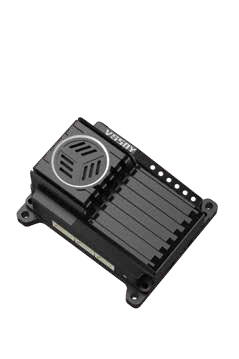
A bare VS50Y module can suit a project that already has the other required equipment and a supported integration path. An itemized complete kit is worth comparing when the camera-side equipment, receiving side or necessary accessories still need to be supplied together. The cheaper line item is not automatically the cheaper working system. VS50Y is an independent video-transmission product, and its photograph shows a fan-equipped housing; its current source does not support importing the cloud box's repeated parameter table. Compare what each offer actually completes. A useful decision accounts for the parts already owned, the missing functions and who will demonstrate the assembled result.
A module offer can be appropriate for an integrator building a larger system. It may be a replacement for an identified part or a component in a configuration the project already understands. In that situation, buying another complete package can duplicate equipment. The relevant question is whether the quoted VS50Y item fills an established role in a supported existing arrangement.
A first-time buyer faces a different task. A module photograph does not show the complete camera-to-viewer equipment list, power arrangement or supported application. If those items have not been selected, a low module price cannot be compared directly with a complete system offer. The missing work has a cost even when it does not appear on the first quotation.
Start with the outcome the customer wants to purchase. For example, a civil inspection team may need an agreed camera picture at a named ground-viewing position. That is a complete-system result. The equipment list should show which supplier or existing customer item performs each necessary function. VS50Y belongs in that comparison by its supplied role, not by an unsupported assumption that every required part is inside its enclosure.
| Offer boundary | What it can reasonably be compared with | Question before buying |
|---|---|---|
| One identified module | Another offer for the same defined component scope | Does it match the required supplied model and supported arrangement? |
| A matched endpoint package | Another package containing the corresponding required endpoints | Which equipment and accessories complete that package? |
| An integrated camera-to-viewer kit | Another offer delivering the same agreed viewing task | Is the camera, viewer and necessary integration work actually included? |
| A replacement in an existing system | The cost of restoring that supported arrangement | Which existing parts can remain, and which supported service is required? |
These are purchase boundaries, not announced VS50Y kit variants. The current reference does not establish standard endpoint models or included accessories. Ask the supplier to identify the offered equipment instead of treating the table as a catalog of packages already available.
Keep customer-owned equipment on the comparison sheet. A monitor, camera or computer already present in the project may reduce the new supply needed. That item still needs to fit the supported arrangement; ownership does not prove compatibility. Showing it explicitly prevents both accidental duplication and the opposite mistake of assuming an existing device completes an undocumented connection.
A component list is more useful when it explains a function. The camera creates the picture; some equipment produces the transportable video; the link moves the supported signal; and a receiving or viewing function presents it to a person. A complete kit may combine some of those functions. A bare module may provide only one part of the path.
Ask which function remains outside the offer before adding a guessed accessory. If the proposed viewer cannot consume the supplied signal directly, the missing item may be a supported conversion function, not simply a cable. If the package does not include a camera, a claim about the final picture needs to identify the customer camera used. The difference between function and part helps avoid buying a box that does not resolve the actual gap.
This article does not assign an interface, range, throughput, operating voltage or enclosure rating to VS50Y. The supplier brochure contains a repeated table also associated with the separate cloud-box product, so those figures are not used here. A complete offer needs corrected model-specific information for any such value that decides the customer's installation or performance requirement.
A first complete arrangement may require supported setup work that a replacement module does not. The supplier should explain what they will provide: an assembled package, a demonstrated configuration, installation information or support for a named customer-owned component. These are different forms of value. Avoid paying for an undefined promise of integration, but also avoid treating necessary supported work as if it were free.
For an experienced integrator, doing some work internally can be a sensible choice. The comparison should reflect their actual capability, available time and access to proper technical documentation. For a team that needs a working camera view without designing the link, an itemized package may be easier to assess. Neither buying style is universally better; each has a different starting point.
Separate repeatable setup support from an unsupported performance claim. A supplier can explain how the offered components are intended to work together without proving a particular field result. If the quotation includes a stated performance outcome, ask what exact configuration and conditions support it. The presence of a fan or a substantial housing is not evidence of that outcome.
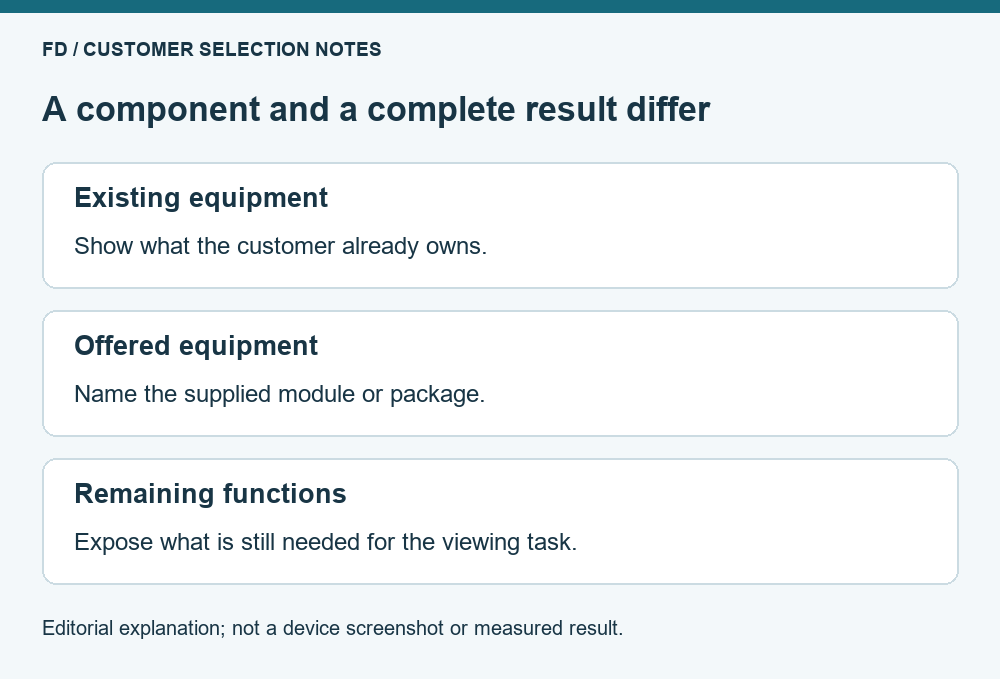
In a replacement example, a project already uses an identified supported video arrangement. One component needs supplier-authorized replacement. The team can provide the existing equipment identity and ask whether the offered VS50Y unit is the correct replacement. The useful price comparison concerns that supported replacement and any necessary service, not a second camera or monitor the project does not need.
In a first-installation example, a building-inspection team owns a camera but has not selected a video link or viewing endpoint. A module-only offer leaves several decisions open. A complete-package offer should name the camera boundary, receiving equipment, viewing method and necessary accessories, and state which items remain customer supplied. Its higher total may cover real missing functions rather than a markup on the same component.
Now consider two complete-kit offers with different included cameras or viewing devices. Their totals are still not directly comparable until those differences are visible. A buyer may prefer the existing camera for a particular observation task. Another may prefer a fully supplied package. Use the required picture and working arrangement to decide, rather than force both offers into an apparently identical product row.
A useful offer also explains how the selected arrangement can be maintained. Ask about the supported replacement route for the supplied component and whether the relevant connection and installation information accompanies the equipment. This is a practical service question; it is not a reason to assume that any later module with a similar case will be interchangeable.
The VS50Y photograph helps identify a fan-equipped housing and external fixing features. Those visible details can prompt a request for proper installation information, but they do not establish cooling requirements or permit a particular mounting method. A complete kit should include the documentation needed for the offered assembly, while a bare-module buyer needs to know which installation decisions remain their integrator's responsibility.
If expansion is planned, describe the actual addition rather than buy around the word scalable. A later camera, an additional viewing position or another supported platform can change different parts of the system. Ask the supplier which documented configuration supports the proposed addition. No expansion capability is established here solely by the VS50Y model name.
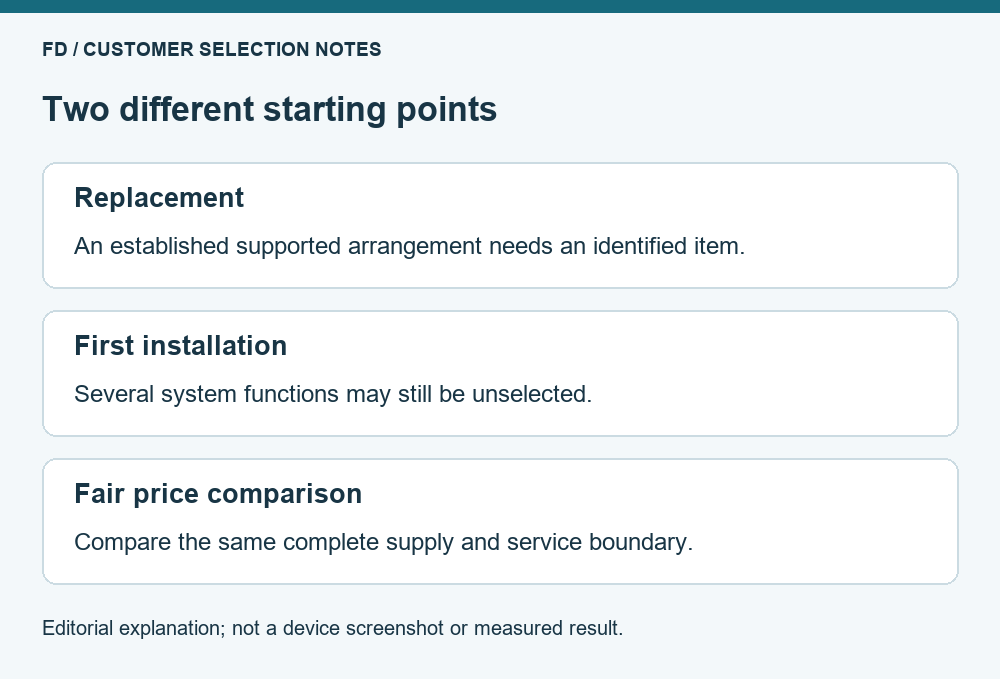
Prepare a short comparison with three columns: already owned, supplied in this offer and still required. Add a plain-language function beside each item. Then ask each supplier to demonstrate the same agreed camera-to-viewer result, using the equipment represented in their offer. This reveals omissions without asking the buyer to invent the technical solution.
The lower-cost purchase may be a bare module when the surrounding system is genuinely ready. It may be a complete kit when several missing functions would otherwise have to be sourced and integrated separately. A sound comparison can also show that neither offer yet answers a critical requirement. Keeping that gap visible is better than selecting by a headline that cannot be connected to the customer's actual equipment.
For the current product identity and a supply discussion, review VS50Y and ask FD for an itemized module or complete-system offer. Include the equipment already owned and the picture the team needs to receive. That provides a concrete basis for explaining a price difference without inventing specifications or claiming that a higher price alone proves better quality.
No. It can duplicate equipment when an experienced project already has a supported arrangement. Compare the functions still required, existing compatible equipment and the integration work included in each offer.
Do not infer that from the product name. The offer must identify the supplied endpoint equipment and accessories. A photograph of one module cannot establish the content of a complete package.
No. These are separate products, and the repeated source table creates unresolved model attribution. Use corrected VS50Y documentation for technical values that determine the proposed arrangement.
Additional required hardware, supported conversion or viewing equipment, useful accessories and defined integration service may account for it. Ask for those items rather than accept a vague quality claim or compare unlike scopes.
State whether this is a replacement or a first complete installation, identify equipment already owned and describe the required viewing result. Ask the supplier to distinguish included items, exclusions and the supported arrangement being offered.
The VS50Y page and actual supplier photograph support product identity only. Repeated specification rows are deliberately excluded. Replacement and first-installation situations are editorial examples, prepared on 21 October 2026.

 Tel: +86-15059599996
 Email: info@fpvdroneskit.com
 MP/WhatsApp: +86-15059599996
 Manufacturer Address:Quanzhou Valley Nanan Science and Technology Innovation Center, No. 89 Shijing Avenue, Shijing Town, Nanan City, Fujian Province