


For a build planned around an appropriate 2.4GHz ExpressLRS receiver. Include the receiver model and firmware family with the enquiry.
| Price | On request |
|---|---|
| Model | Boxer |
| Display | 128×64 monochrome LCD |
| Firmware | EdgeTX |
| Transmitter power supply | 6.6–8.4V DC; approved 2S lithium arrangement; batteries not included |
| RF frequency bands | 2.400–2.480 GHz |
| Internal RF options | ELRS 2.4GHz, 4-in-1 or CC2500; separate order versions |
| Charging | USB-C; use the prescribed battery types |
| Control channels | Up to 16; receiver dependent |
| Dimensions | 235×178×77 mm |
| Transmitter weight | 532.5 g; battery basis not specified in source |
| External module bay | JR-compatible |
| Receiver protocols | Module dependent; match receiver, firmware and regional version |
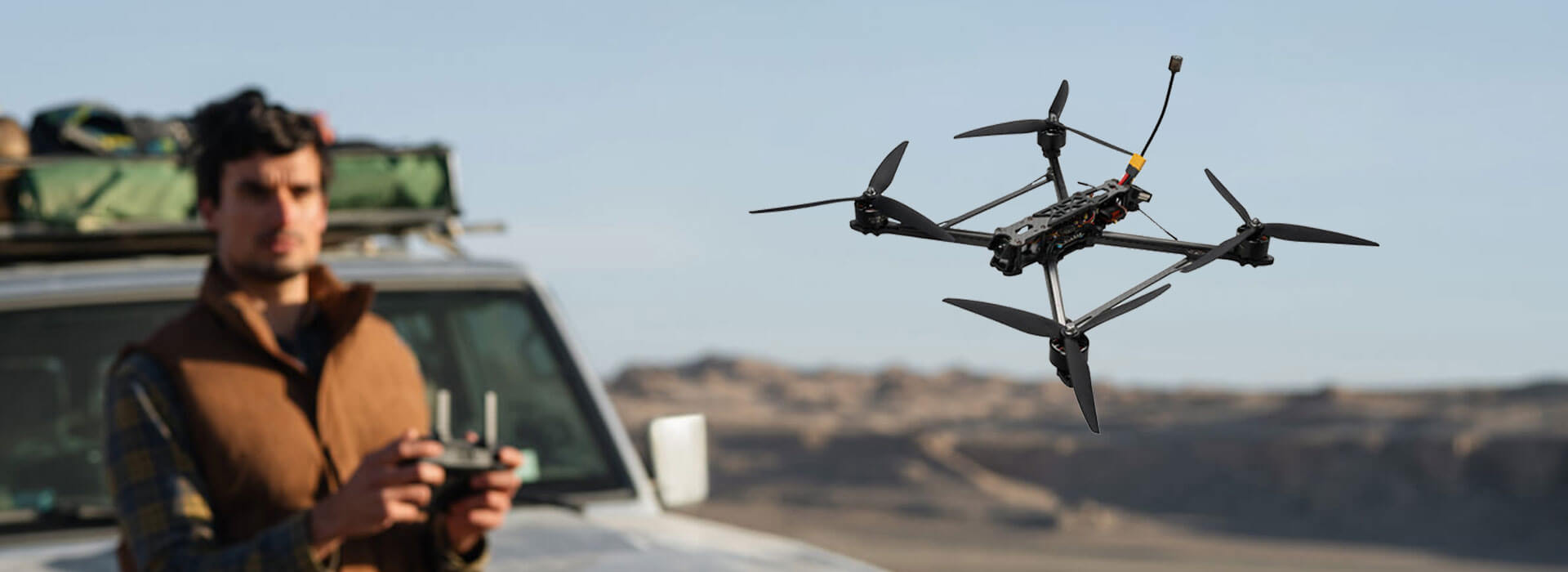
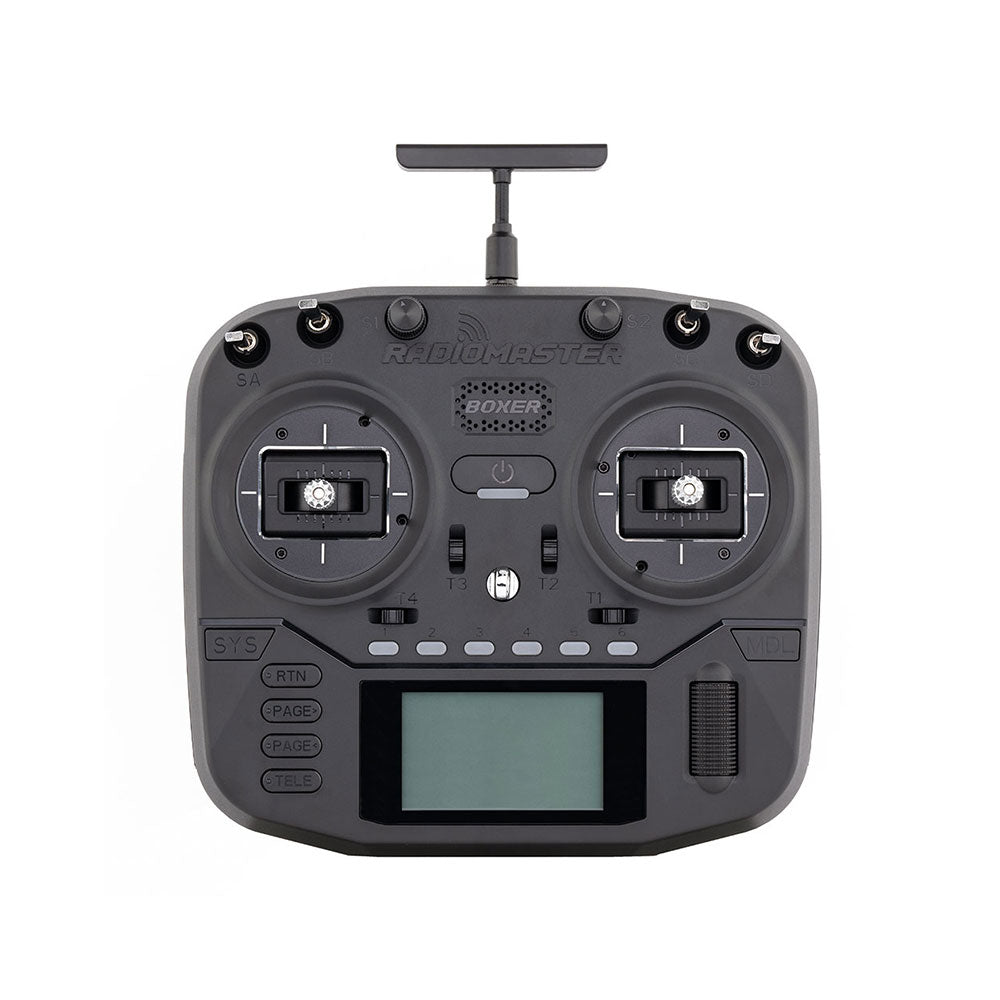
The RadioMaster Boxer suits an FPV drone build when you want full-size control sticks in a compact handset and plan to view the camera through separate goggles or a monitor. Its monochrome screen handles radio menus and model information. The important order detail is inside the case: choose an ELRS, 4-in-1 or CC2500 version to match the receiver you intend to use.
Those are hardware alternatives, not three interchangeable menu settings. This listing covers the standard Boxer; identify the desired stick mode and region on the quotation instead of assuming every item pictured represents the same order configuration.
For a build planned around an appropriate 2.4GHz ExpressLRS receiver. Include the receiver model and firmware family with the enquiry.
For a model collection using supported multiprotocol receivers. Compare the actual receiver protocols before selecting this version.
A separate multiprotocol option with its own supported receiver set. It should not be treated as the complete 4-in-1 hardware.
| Your starting point | Useful order information | Buying decision |
|---|---|---|
| A receiver already fitted in a drone | Receiver model, protocol and firmware | Match the internal RF hardware to that receiver before considering accessories. |
| A new aircraft without a receiver | Required outputs and aircraft control connection | Select a receiver and transmitter as a pair; the radio alone does not complete the aircraft link. |
| A fleet used in different locations | Country of operation and applicable regional version | RadioMaster offers FCC and EU LBT configurations with different protocol scope. |
| A separately owned RF module | Exact module type and power requirements | Review its fit and support for the JR-compatible rear bay. |
Boxer uses EdgeTX, V4 Hall-sensor sticks and a six-position button group. The standard stick hardware and optional AG01 hardware are different specifications. A pilot comparing radios should consider grip, switch reach and stick feel together: a smaller case does not automatically suit every hand position.
The 128×64 display is a setup interface. For an FPV aircraft, choose the camera, video transmitter and viewing device independently of the control radio. This avoids a common buying mismatch in which a handset's screen is mistaken for an integrated live-video ground station.
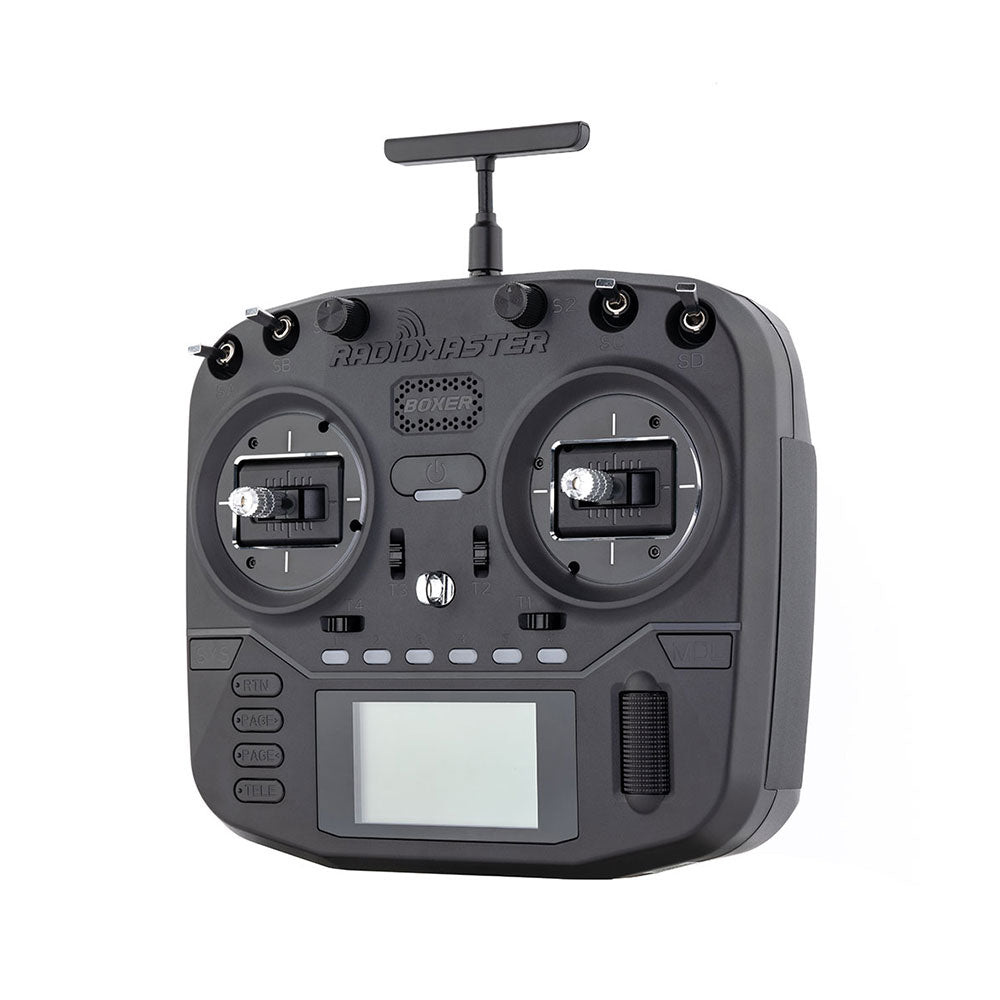
The listed case size is 235×178×77mm. Consider the fitted antenna, carrying case and any rear module when planning your equipment bag, rather than comparing the bare case alone. Up to 16 control channels are listed, with the available arrangement dependent on the receiver; count the functions your own aircraft needs.
The guide specifies a 6.6–8.4V supply and approved two-cell lithium battery arrangements. Batteries are not included in the manufacturer's package list. A battery tray, USB cable and charging circuit are not substitutes for the correct battery pack.
Ask for separate line items for the transmitter configuration, receiver, batteries and any optional module. That makes two quotations easier to compare and prevents a low handset-only price being mistaken for a complete FPV control package.
Is Boxer Max the same product?
This page describes the standard Boxer. A Max or other special edition needs its own hardware and package comparison.
Does the ELRS version also contain the 4-in-1 module?
These are distinct internal RF order options. An external module is a separate purchase and compatibility check.
Should the highest advertised channel count decide the purchase?
Use your aircraft's required functions and chosen receiver connection as the starting point. Maximum channels do not describe every receiver's physical outputs.
Technical references: RadioMaster standard Boxer product page and A1.9 quick-start guide. Configuration and accessories are specified in the quotation.
| Configuration display | 128×64 monochrome LCD |
|---|---|
| Radio firmware | EdgeTX |
| Internal RF hardware | ELRS 2.4GHz, 4-in-1 or CC2500; separate order versions |
| Internal RF band | 2.400–2.480 GHz |
| Receiver protocol scope | Module dependent; match receiver, firmware and regional version |
| Control channels | Up to 16; receiver dependent |
| Transmitter power supply | 6.6–8.4V DC; approved 2S lithium arrangement; batteries not included |
| Charging connection | USB-C; use the prescribed battery types |
| Case dimensions | 235×178×77 mm |
| Listed radio mass | 532.5 g; battery basis not specified in source |
| External module bay | JR-compatible |
| Stick hardware | V4 Hall-sensor gimbals; AG01 optional |
Choose a RadioMaster Boxer FPV drone radio by receiver protocol, internal RF version and region. Compare the standard controls, battery and package options....
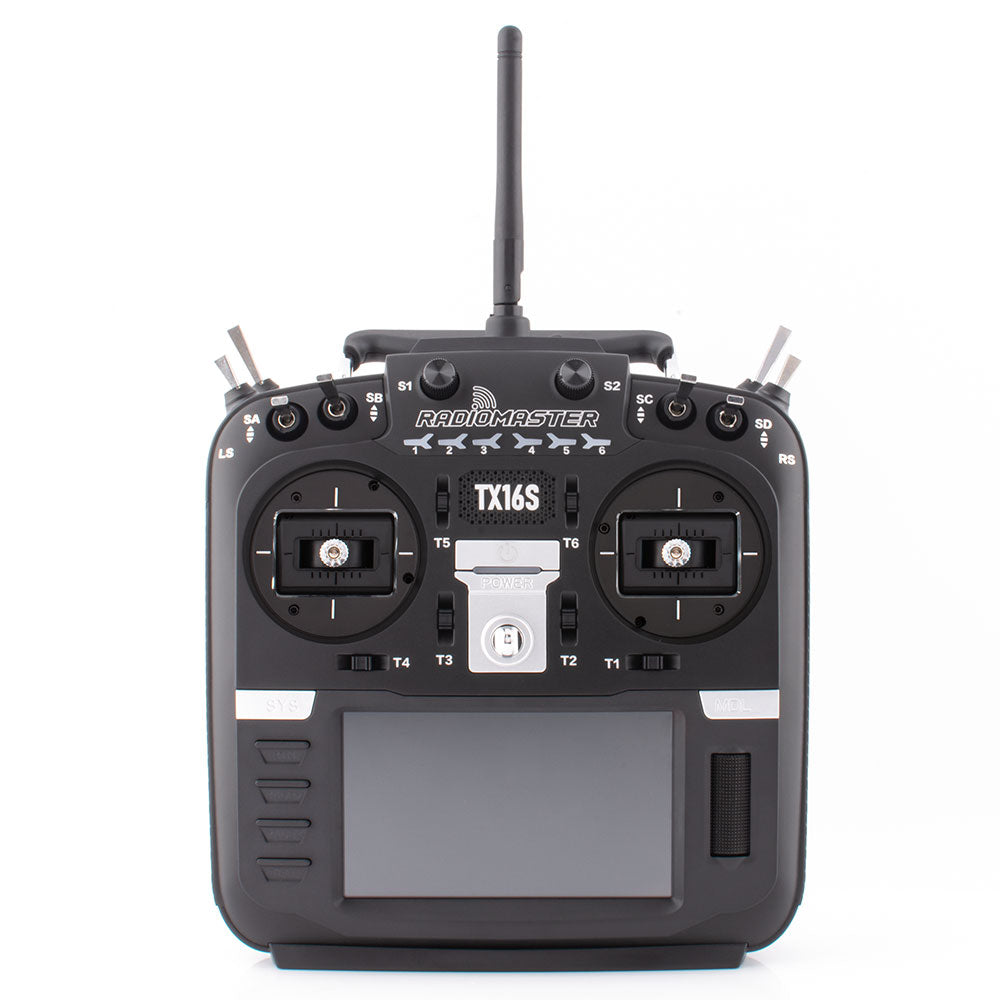
Choose the RadioMaster TX16S Mark II for FPV drones or UAV models. Compare ELRS and 4-in-1 versions, regional options, stick gimbals and batteries....

 Tel: +86-13959965075
 Email: info@fpvdroneskit.com
 MP/WhatsApp: +86-13959965075
 Manufacturer Address:Quanzhou Valley Nanan Science and Technology Innovation Center, No. 89 Shijing Avenue, Shijing Town, Nanan City, Fujian Province