Author:Military Drone Manufacturer TIME:2026-11-20
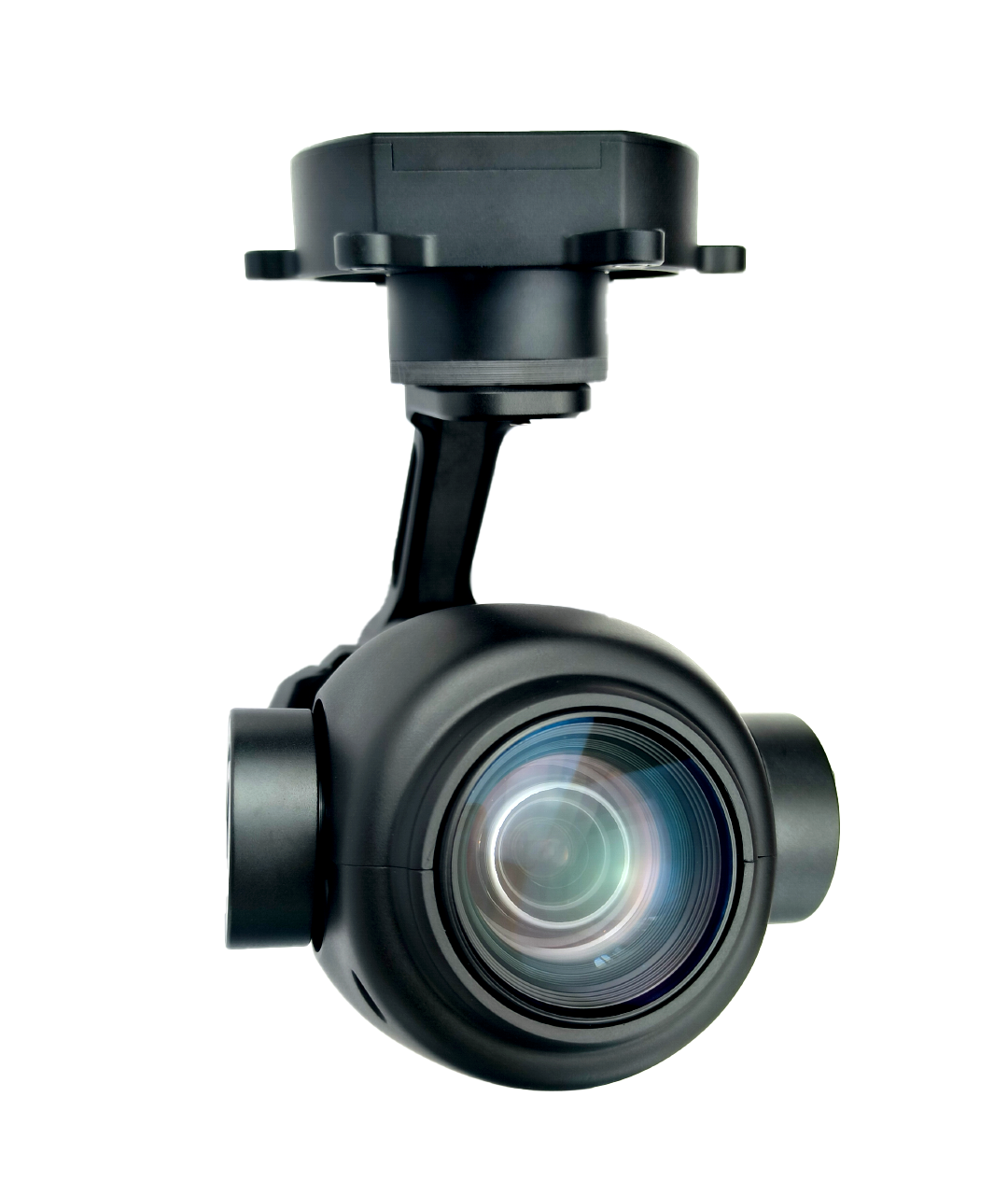
A TOPOTEK DIP30S4K makes sense when the inspection needs the extra recorded or received detail offered by a 4K mode and the UAV can accommodate the complete payload. Its listed 30x optical lens and 4K30 IP video are useful capabilities, but the buyer still needs to choose the endpoint that must retain that detail. A local 4K file and a useful live operator picture are different purchase outcomes. Begin with a representative feature, identify which output will be used, then check the camera, mounting, power and receiving package together. This guide helps decide whether the larger image mode contributes to the actual deliverable.
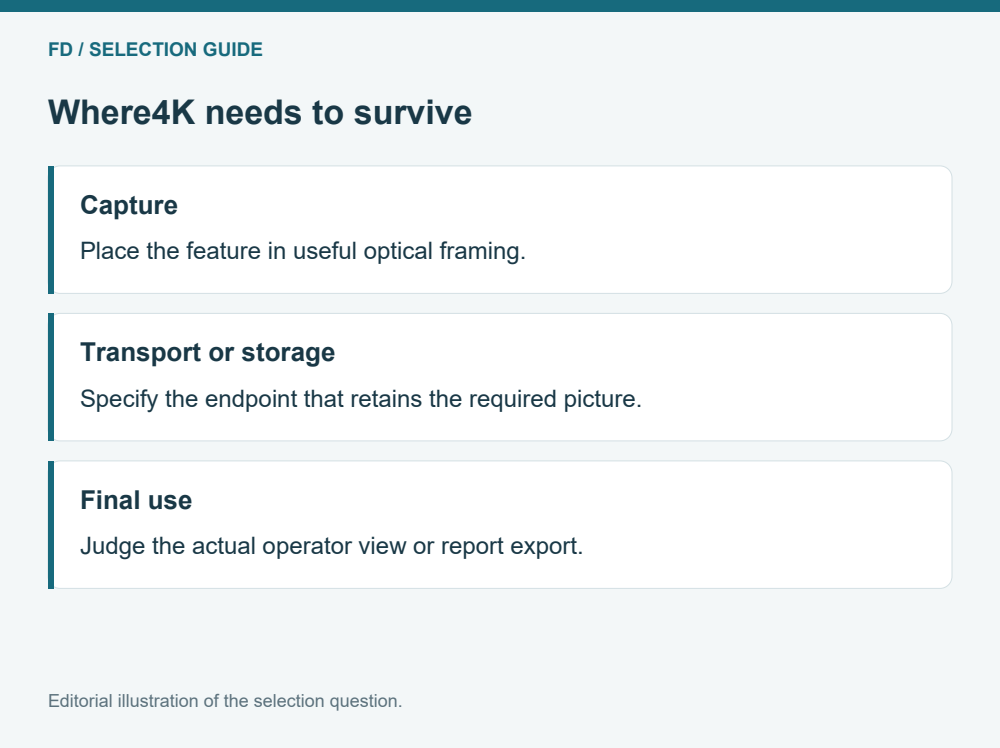
An image mode earns its place in an order when it improves a specific output. For a maintenance report, that output may be an original frame reviewed after the flight. For a live civil inspection, it may be the picture available to a second observer. The same nominal camera capability can serve those buyers differently.
Name the smallest feature the recipient needs to interpret and the surrounding context they need to recognize its location. Then ask to see that combination at the proposed optical framing. A larger file is not automatically a more informative report if the feature is out of focus, poorly illuminated or lost during resizing.
Choose whether 4K is essential at capture, at transmission, at display or at final export. These are separate questions. Requiring it at every point may add equipment without improving the decision the customer must make. Conversely, requesting only a 1080p viewing demonstration may leave the local 4K recording requirement untested. Use the table to identify the relevant outcome before discussing the camera’s maximum settings.
| Your needed outcome | Evidence to request | What does not settle it |
|---|---|---|
| Post-flight detail review | Original4K local file at useful optical framing | A4K-labelled promotional upload |
| Operator-led decision | Actual RTSP viewing path with the feature visible | A camera-only local recording |
| 1080p report delivery | Compare a representative final export | Assuming more pixels always change the conclusion |
| Both live and stored detail | Demonstrate both selected modes together | Two unrelated mode entries in a brochure |
TOPOTEK lists 4K30 and 1080p30 modes for DIP30S4K, IP/RTSP output and local TF storage with H.264. Those entries identify supported categories of operation. They do not establish the exact delivered stream parameters, card capacity, simultaneous recording arrangements or behavior of a particular application.
If the operator needs only a general overview while the report needs the larger local file, ask the supplier whether the offered revision can provide that arrangement and show it working. Do not assume independent live and recording modes from the presence of two resolutions in a table. When both endpoints need 4K, include both in the acceptance request.
For each endpoint, specify the practical requirement in words before a number: continuous operator viewing, original file review, selected still export or shared observer display. Then add the resolution and frame-rate requirement that has a reason to be there. This makes it easier to identify a mode mismatch without turning every line of the camera brochure into a mandatory system specification.
The model’s 30x optical lens is separate from the 4K mode. Optical framing changes how much of the scene occupies the captured view. Output resolution describes how the image is represented. A buyer usually needs both to work together: the feature must occupy a useful part of the picture, and the chosen endpoint must retain enough information to interpret it.
Ask for a wide contextual view and a narrower detail view of the same representative structure. Compare them at sensible display sizes. Do not infer that a 30x label guarantees legible lettering or a visible defect at a particular distance. Lighting, scene contrast, focus, motion and the size of the feature all matter.
Avoid judging from an enlarged crop copied out of a presentation. The crop may help explain where to look, but an original file is better evidence for retained detail. When a supplier provides both a context shot and an original close view, the customer can assess whether the camera answers the inspection question instead of merely producing a dramatic zoom sequence.
An IP picture needs a receiving system that can accept, decode and display the selected stream. The screen’s own pixel count is only one part of that path. The video link, receiver, network arrangement and application also influence what the observer sees.
Ask the proposed integrator to demonstrate the actual viewer with the intended DIP30S4K mode. Look at whether the required feature remains useful inside the application’s real video window, with its normal controls and information panels visible. A full-screen demonstration on another computer does not establish that result for a handheld station.
Larger image dimensions do not provide a reliable bitrate by themselves. Compression settings and scene content affect traffic and storage. Obtain a representative file or measured stream information from the supplied configuration if capacity planning matters. This keeps the buying conversation concrete: the camera supports the listed mode, while the complete receiving package must show that the mode serves the intended operator position. No particular network capacity or decoding performance is assumed here.
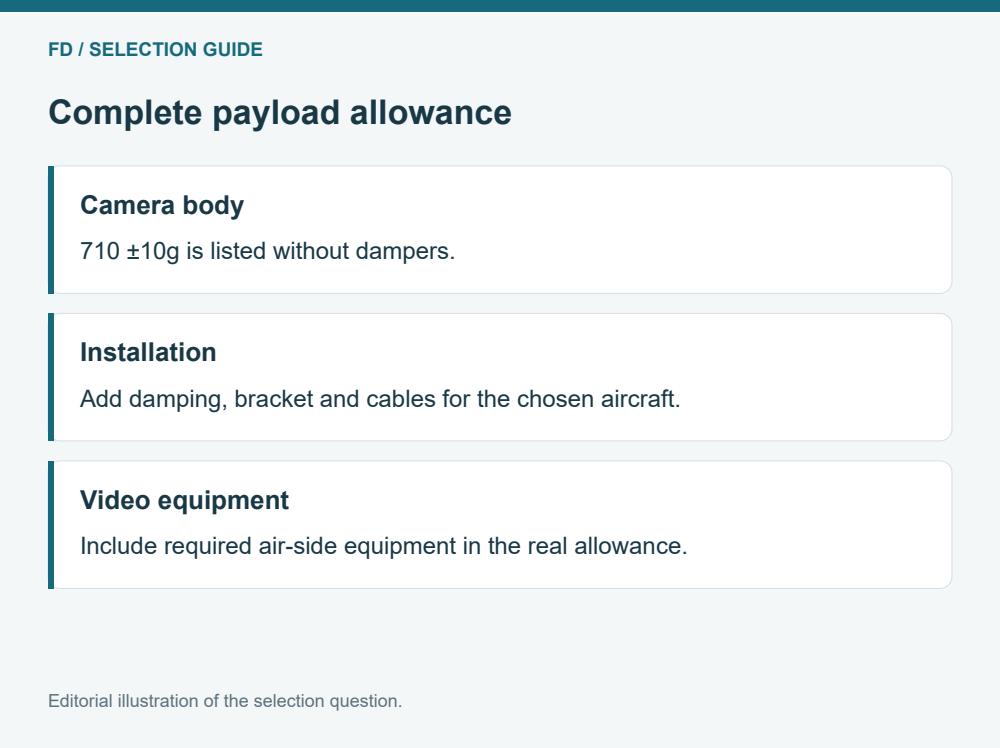
DIP30S4K is listed at 710 ±10g excluding dampers, with dimensions of 140 ×162 ×144mm. The camera uses a DC12–26.2V input and the manufacturer labels dynamic power as 10W. These figures are relevant to payload selection, but the quoted mass does not include every installed item and the power line is not a complete peak supply specification.
The actual allowance should include damping, bracket, cable runs and any added encoder or air-side video equipment. Confirm the moving envelope from the proper installation information rather than using the body dimensions as clearance for every gimbal position. A camera can fit physically in one orientation and still need more working space.
Compare the complete proposed assembly with the aircraft’s supported payload and integration limits. The article does not assign an endurance change to this camera: that would require aircraft-specific evidence. The purchasing decision is whether the extra useful image information justifies the real installed package for your platform, not whether a standalone body weight looks small beside an unrelated UAV specification.
Imagine a buyer who needs a live overview during an authorized building inspection, with selected report frames checked later on a desktop. That buyer may benefit from a local 4K file even if the operator display is used mainly for context. The configuration question is whether the offered camera and software deliver the requested recording and viewing modes together.
A second buyer makes decisions directly from the live picture and rarely reopens the original recording. For that buyer, the decisive evidence is the required detail inside the actual ground application. A larger local file may add little value if the inspection decision is made through a lower-detail operator view.
These are hypothetical purchasing situations, not customer results. Neither makes 4K universally necessary or unnecessary. They show why it is useful to ask who receives the image, when they inspect it and what decision they make. A clear answer can justify the mode or reveal that a different payload, optical requirement or viewing arrangement deserves consideration.
A useful request names the civil inspection feature, expected context, selected live endpoint and required stored file. Include the available installed mass and space, the intended power architecture and the receiving application already in use. That allows a supplier to discuss a defined DIP30S4K package rather than assume that every buyer wants the largest mode everywhere.
Request one original local file and, where live viewing matters, a demonstration through the proposed ground arrangement. Ask for the actual delivered recording mode, stream mode and storage scope to be listed. Confirm that the example is from the offered configuration rather than a different camera or an edited showcase.
If 1080p already answers the required visual task, record why the larger mode is unnecessary for that job. If 4K preserves detail that changes the report or the live decision, use that evidence to justify the installation allowance. The objective is a picture the customer can use, backed by a package that can provide it, without an unsupported promise about inspection distance or aircraft performance.
Is the 4K recording necessarily the live view?
No. The manufacturer lists output and storage capabilities, but the supplied mode combination must be identified. Ask for the exact recording and live settings rather than assume they are independent or identical.
Can I calculate storage from 4K30 alone?
That label is insufficient. Obtain the actual recording settings and a representative file duration and size. Use those values for your own storage requirement without treating the example as a fixed camera-wide bitrate.
Does 30x optical mean every detail will be readable?
It describes lens magnification. Feature size, focus, light, motion and the viewing path affect the result. Assess a representative structure at the framing the inspection needs.
Is710g the total UAV payload increase?
The published figure excludes dampers. Mounting hardware, cables and added video equipment must be included in the complete installed allowance. The aircraft-specific effect on operation requires separate integration evidence.
What should I send with a quotation request?
Send an example of the required detail, the intended live or stored endpoint, installed space and mass limits, and the receiving equipment you plan to use. That makes a proposed configuration easier to compare.
Check the DIP30S4K product and request the required video and recording modes

 Tel: +86-15059599996
 Email: info@fpvdroneskit.com
 MP/WhatsApp: +86-15059599996
 Manufacturer Address:Quanzhou Valley Nanan Science and Technology Innovation Center, No. 89 Shijing Avenue, Shijing Town, Nanan City, Fujian Province