Author:Military Drone Manufacturer TIME:2026-09-06
Introduction
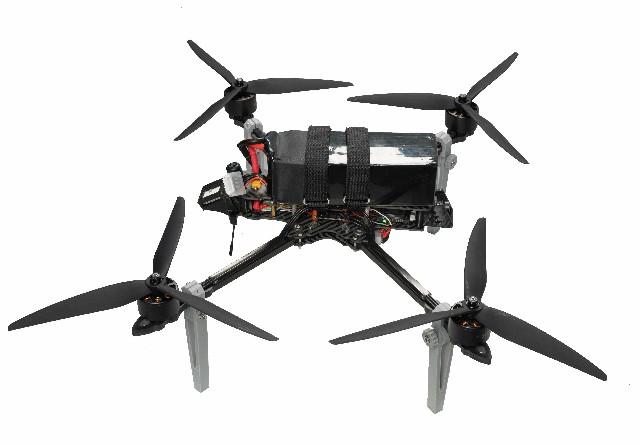
Effective communication is central to the operation of military FPV drones. These systems must support real-time control and video feedback while operating in complex and potentially contested electromagnetic environments. Understanding how communication systems are designed helps explain their importance in FPV drone performance.
Dual-Link Communication Requirements
FPV drones depend on two parallel communication paths: one for control commands and one for video feedback. Both links must be synchronized and stable.
Military platforms prioritize balanced performance, ensuring neither link becomes a single point of failure during operations.
Latency and Responsiveness
Low latency is essential for precise FPV control. Communication systems are optimized to minimize processing and transmission delays.
This responsiveness allows operators to react quickly to visual input and maintain accurate flight control in dynamic scenarios.
Antenna Design and Placement
Antenna configuration significantly influences communication quality. Proper placement ensures consistent signal coverage throughout the flight envelope.
Military FPV drones often use robust antenna designs that balance durability with signal performance.
Adaptability in Operational Environments
Defense operations may occur in varied terrain and electromagnetic conditions. Communication systems must adapt to these variables without extensive reconfiguration.
Flexible system design improves usability and reduces operator workload.
Reliability and System Redundancy
While FPV drones emphasize simplicity, communication reliability remains critical. Redundant components or fallback modes may be incorporated to enhance mission continuity.
Such measures improve confidence in system performance during extended or high-risk operations.
Conclusion
Military FPV drone communication systems are engineered to deliver reliable, low-latency connectivity under demanding conditions. Through careful consideration of architecture, latency, and adaptability, these systems support effective FPV operations. As operational environments evolve, communication technology will remain a key focus for FPV drone development.


 Tel: +86-13959965075
 Email: info@fpvdroneskit.com
 MP/WhatsApp: +86-13959965075
 Manufacturer Address:Quanzhou Valley Nanan Science and Technology Innovation Center, No. 89 Shijing Avenue, Shijing Town, Nanan City, Fujian Province