Author:Military Drone Manufacturer TIME:2026-09-06
Introduction
Video transmission is a defining element of FPV drone operation. For military FPV systems, the quality and speed of video delivery directly influence control precision, situational awareness, and mission effectiveness. Latency, in particular, represents one of the most critical performance factors in FPV drone design.
Importance of Low-Latency Video
FPV drones rely on real-time video to guide every maneuver. Even small delays between camera capture and display can affect operator response and flight accuracy.
In military applications, low latency enables precise navigation in complex environments and supports rapid decision-making under pressure.
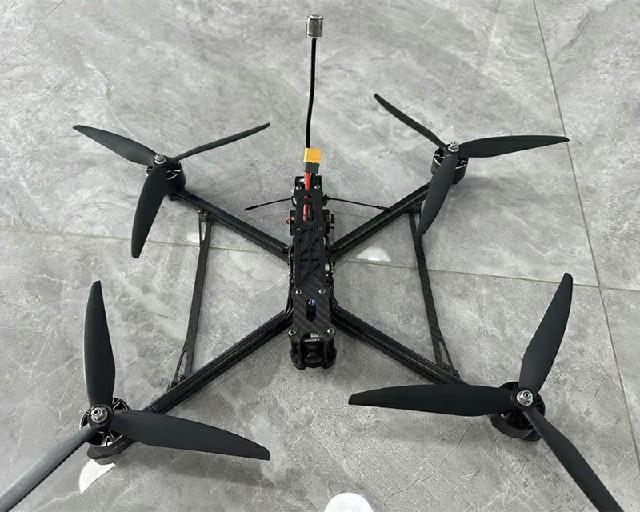
Components of the Video Transmission Chain
The video transmission chain includes the onboard camera, encoding hardware, transmitter, receiver, and display system. Each component introduces potential delay.
Optimizing the entire chain is essential to achieve consistently low end-to-end latency.
Analog and Digital Video Systems
Both analog and digital video systems are used in FPV applications. Analog systems traditionally offer lower latency, while digital systems provide improved image clarity and signal robustness.
Military FPV platforms may prioritize latency performance while balancing the benefits of digital transmission technologies.
Compression and Encoding Trade-Offs
Video compression reduces bandwidth requirements but adds processing delay. Military FPV systems must balance compression efficiency with latency constraints.
Hardware-based encoding and optimized codecs help minimize delay while maintaining usable image quality.
Environmental Effects on Video Performance
Signal obstruction, interference, and terrain can degrade video transmission. Maintaining usable video under degraded conditions is critical for FPV operation.
Design strategies include transmission power management, antenna optimization, and error correction techniques.
Impact on Operator Performance
Video latency affects not only technical performance but also operator workload and fatigue. Consistent, low-latency video allows operators to fly more intuitively and with greater confidence.
Improved video responsiveness enhances overall mission effectiveness.
Conclusion
Video transmission and latency are central to the performance of FPV drone systems. Through careful optimization of the transmission chain, military FPV drones achieve the real-time visual feedback required for tactical operations. Continued advances in video technology will further improve FPV capabilities.

 Tel: +86-13959965075
 Email: info@fpvdroneskit.com
 MP/WhatsApp: +86-13959965075
 Manufacturer Address:Quanzhou Valley Nanan Science and Technology Innovation Center, No. 89 Shijing Avenue, Shijing Town, Nanan City, Fujian Province