Author:Military Drone Manufacturer TIME:2026-09-06
Introduction
In FPV drone operations, video latency defines how effectively an operator can interact with the aircraft. For military FPV systems, managing latency is a technical priority that influences control accuracy, safety, and mission success. Understanding how latency arises and how it is managed provides insight into FPV system design.
Sources of Video Latency
Latency originates from multiple sources within the video system. Camera sensors, image processing, encoding, transmission, decoding, and display all contribute to total delay.
Identifying and minimizing each source is essential for achieving acceptable performance.
Hardware Optimization Strategies
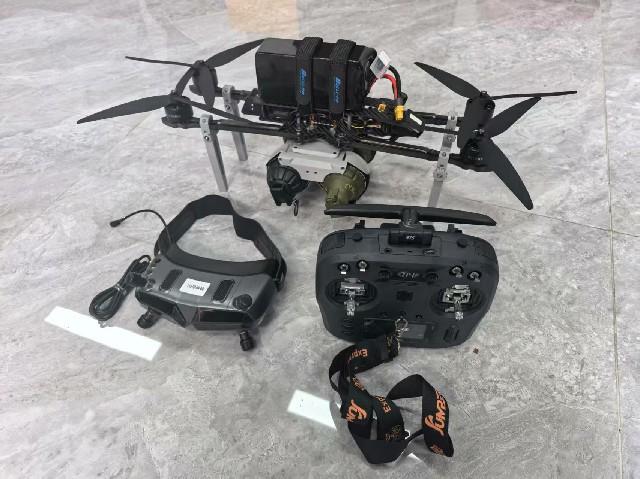
Military FPV systems often rely on dedicated hardware for video processing to reduce latency. Specialized chips can encode and transmit video more efficiently than general-purpose processors.
Hardware optimization reduces variability and improves consistency under operational stress.
Transmission Protocol Considerations
Video transmission protocols influence both latency and reliability. Lightweight protocols reduce overhead and processing delay.
Military FPV platforms may prioritize simplicity and predictability over advanced features to maintain low latency.
Balancing Image Quality and Responsiveness
High-resolution video improves clarity but increases processing demands. Military FPV systems must balance image quality against responsiveness.
Operators typically prefer consistent, responsive video even if image resolution is reduced under poor conditions.
Latency and Control Synchronization
Video latency must be aligned with control response to ensure intuitive operation. Mismatches between visual feedback and control input can degrade performance.
System-level synchronization enhances operator confidence and precision.
Operational Implications
In tactical scenarios, reduced latency improves reaction time and maneuver accuracy. This advantage can be decisive in close-range or high-speed operations.
Latency management therefore represents both a technical and operational priority.
Conclusion
Managing video latency is fundamental to military FPV drone effectiveness. Through careful system design and optimization, FPV platforms deliver responsive visual feedback that supports precise control and situational awareness. As technology advances, latency reduction will remain a core focus in FPV system development.

 Tel: +86-13959965075
 Email: info@fpvdroneskit.com
 MP/WhatsApp: +86-13959965075
 Manufacturer Address:Quanzhou Valley Nanan Science and Technology Innovation Center, No. 89 Shijing Avenue, Shijing Town, Nanan City, Fujian Province