Author:Military Drone Manufacturer TIME:2026-09-06
Introduction
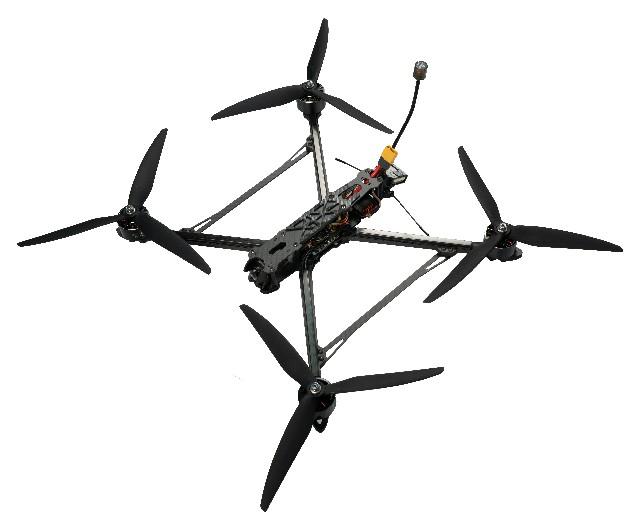
Control and navigation systems enable FPV drones to operate effectively in complex and unpredictable environments. Military FPV platforms rely on these systems to deliver accurate flight behavior while maintaining direct human control. Understanding these technologies highlights their importance in tactical drone performance.
Inertial Navigation Foundations
FPV drones primarily rely on inertial navigation rather than waypoint-based guidance. Onboard sensors continuously track motion and orientation.
This inertial foundation supports rapid movement and allows operators to adjust flight paths instantly.
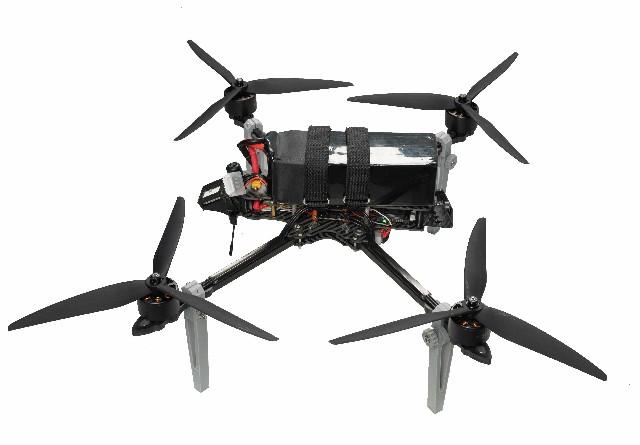
Control Algorithms and Tuning
Control algorithms translate pilot input into motor commands. Proper tuning is critical to ensure stable and responsive flight.
Military FPV drones often require tailored tuning profiles to balance agility with predictability.
Human-in-the-Loop Control Model
A defining characteristic of FPV drones is the human-in-the-loop control model. Operators make real-time decisions based on visual input.
This model allows for adaptive navigation in environments where automated systems may struggle.
Limitations of Autonomous Navigation
While autonomy can support some UAV missions, FPV drones typically avoid heavy automation. Autonomous navigation may introduce latency or reduce operator situational awareness.
Military FPV systems favor simplicity and direct control to maintain reliability.
Environmental Influences on Control Performance
Wind, turbulence, and obstacles affect FPV navigation and control. Robust control systems must compensate for these variables.
Well-designed systems help operators maintain control even in degraded conditions.
Operational Training Implications
Navigation and control technologies influence training requirements. Intuitive systems reduce learning curves and improve operational effectiveness.
Manufacturers must consider usability alongside technical performance.
Conclusion
Control and navigation systems are central to military FPV drone operations. By prioritizing responsive manual control supported by robust sensor systems, FPV platforms achieve the flexibility and reliability needed for modern defense environments.

 Tel: +86-13959965075
 Email: info@fpvdroneskit.com
 MP/WhatsApp: +86-13959965075
 Manufacturer Address:Quanzhou Valley Nanan Science and Technology Innovation Center, No. 89 Shijing Avenue, Shijing Town, Nanan City, Fujian Province