

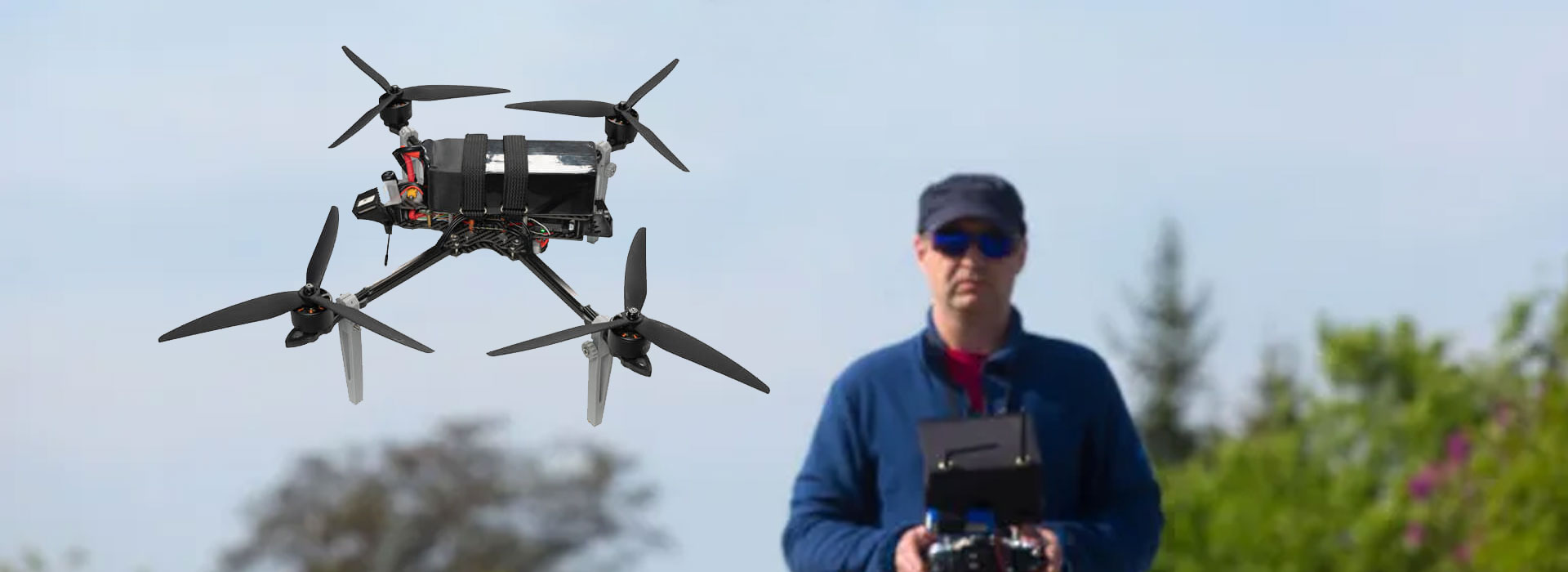
White-hot, black-hot and pseudo-color describe ways of presenting a GC10 thermal image. The manual lists these palette families, but it does not establish temperature measurement or a radiometric file. A useful civil inspection caption therefore names the palette and describes the visible thermal pattern without inventing a numeric result. White-hot and black-hot use opposite grayscale conventions; pseudo-color needs its own legend because colors are presentation choices. For an FPV or UAV review, keep that interpretation beside the image so a reader can understand the shading without treating brightness, a vivid color or an editorial illustration as a measured temperature.
Begin with the meaning of the shading
A thermal image can look like an ordinary photograph because it has recognizable shapes and edges. Its shading has a different purpose. A reviewer should know which image channel is being shown and how the selected presentation represents relative thermal appearance. That information belongs in the caption rather than being left for the reader to guess.
The GC10 brochure names white-hot, black-hot and pseudo-color. This is sufficient to identify the listed palette families. It does not establish every color map, a particular menu layout or a calibrated scale. Keep those further details attached to the actual supplied output and its configuration information.
Imagine a civil equipment review containing a grayscale thermal picture beside a visible photograph. The reader can recognize the same broad area but may not know whether bright regions indicate the warmer or cooler appearance in that thermal view. Naming the palette resolves the visual convention without requiring the caption to claim a measured temperature. It also avoids confusing a grayscale thermal image with a monochrome visible-camera photograph.
White-hot and black-hot reverse the visual convention
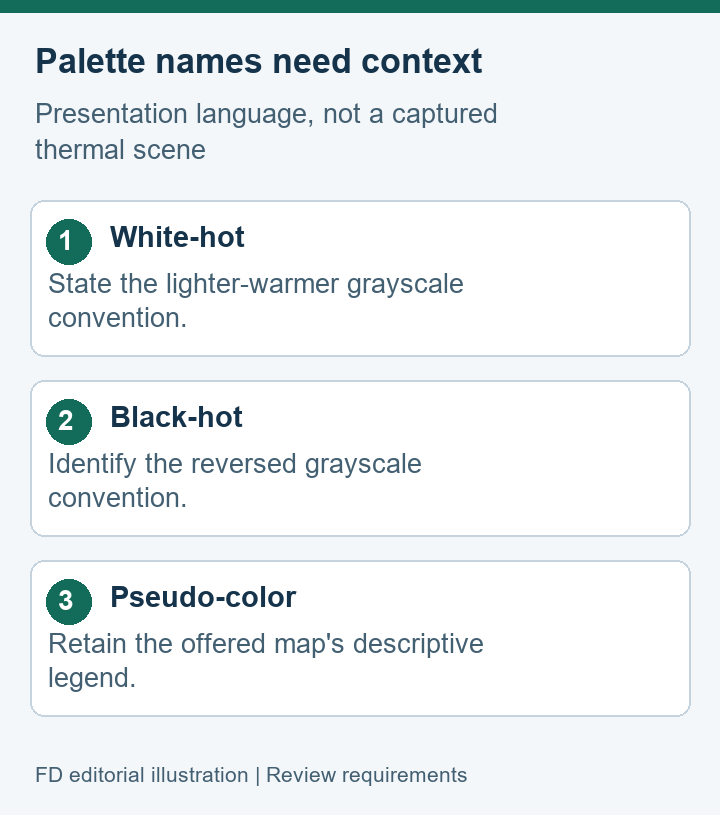
In the general white-hot convention, relatively warmer regions are displayed lighter and cooler regions darker. Black-hot reverses that convention. These definitions explain the names; they do not provide a numeric temperature result for a GC10 image. The offered camera's actual presentation should be identified in its sample documentation.
A reader who is accustomed to white-hot can misread a black-hot picture when the palette is unlabelled. The same visual attention may go to a bright patch, even though the intended convention has changed. A short caption can prevent this. State the palette before describing the feature, and use spatial language that remains clear to someone seeing the picture for the first time.
Changing the visual convention does not justify treating the second image as a new inspection result. If a comparison uses different presentations of an identified source, describe that relationship accurately. If the supplier provides separate captures, keep them identified as separate captures. The palette names alone do not establish that two pictures were made from the same frame or under identical conditions.
- White-hot
- A lighter appearance represents the warmer side of the stated grayscale convention.
- Black-hot
- The grayscale direction is reversed; darker appearance carries that warmer-side convention.
- Pseudo-color
- The supplied map and any legend should explain what the colors represent.
Pseudo-color needs a stated legend
A colored thermal presentation may be easy to notice but harder to interpret without context. Red, yellow or blue can suggest familiar meanings to a reader. The caption should explain the actual supplied palette instead of relying on those associations. A color used for emphasis in a report also needs to be distinguishable from the camera's own presentation.
The GC10 material used here says pseudo-color. It does not name every available palette or establish that a named palette from another manufacturer's camera is present. Avoid turning that broad entry into a list of unsupported options. Ask the supplier to identify the map used in the offered sample and preserve its description with the image.
A legend can be descriptive when numerical measurement is not established. It might explain the direction of the relative presentation and identify the selected palette name. It should not add degree values or alarm thresholds that the source does not support. If an actual output includes further information, the reviewer should retain the supplier's explanation of that information rather than invent its significance.
A caption should identify the presentation
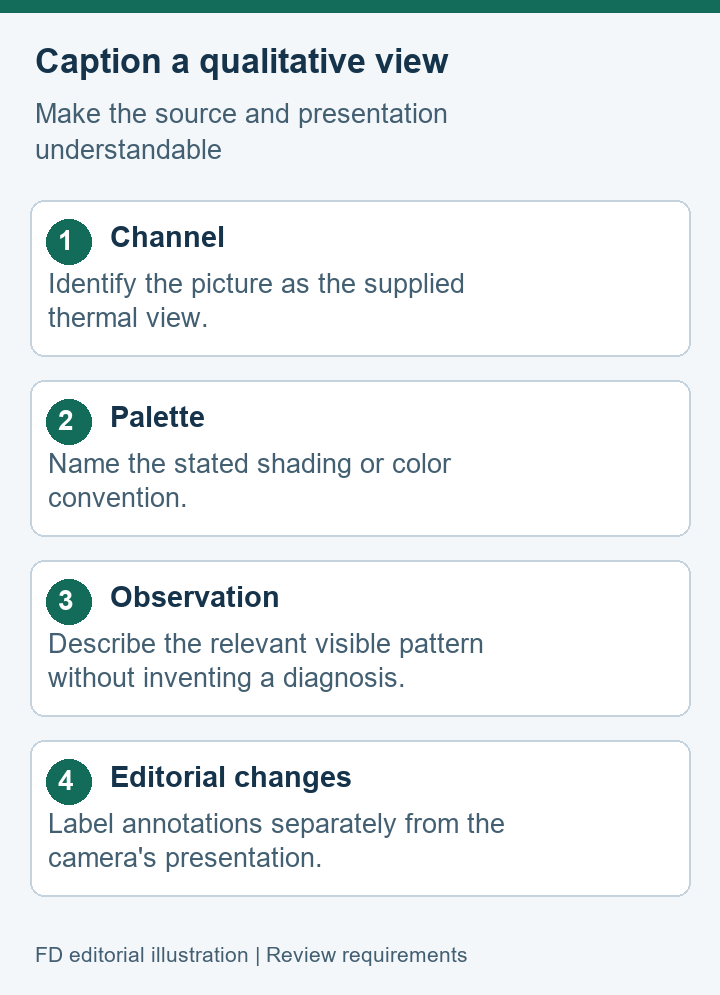
The most useful caption answers a few concrete questions: which camera and channel produced the supplied picture, which palette is shown, and what the author is describing. It should also identify whether the report includes an original received image or an edited explanatory view. These details help a reader understand the picture's purpose.
Use an observation that the image can support. “The area beside the labelled component has a different thermal appearance in this supplied view” is narrower than diagnosing a fault from its color alone. A fault diagnosis requires the relevant inspection context and qualified interpretation. An unlabeled red patch is not, by itself, a documented pass or failure criterion.
A caption can remain short while preserving important limits. It need not repeat the whole equipment specification. Name the model, channel and palette, then describe the relevant visible feature and any editorial change. The resulting text should allow the reviewer to distinguish the illustration from a numeric measurement or a general performance promise.
Consider the final document's presentation as well. A color image reproduced in a monochrome printout may lose distinctions that were clear on the original screen. A palette label and a carefully described location can help retain meaning, but they cannot recover information lost in reproduction. Keep the supplied image available when the review depends on those distinctions, and identify the printed picture as a document reproduction.
Compare descriptions before comparing appearances
Two thermal pictures can look different for reasons that the pictures alone do not explain. They may use different palettes, come from different captures or have been prepared differently for a report. Before drawing a comparison, identify the records and their stated presentation. Otherwise, a visual contrast can be mistaken for a change in the observed equipment.
A palette review has a simpler objective: determine whether the reader can understand the presentation used for the intended question. It does not need to rank every color scheme or declare one universally superior. The inspection team may value a restrained grayscale view for one report and a labelled color presentation for another.
| Note | Purpose in the review |
|---|---|
| Channel identity | Distinguish the thermal image from visible imaging |
| Palette label | Explain the shading or color convention |
| Source record | Identify the supplied capture or example |
| Editorial changes | Separate report annotations from camera presentation |
These notes are an editorial organization example, not a promise that GC10 automatically writes those fields into an image. Their purpose is to keep a report understandable when images move between the supplier, inspection team and later reviewer.
Use editorial illustrations without manufacturing a result
An explanatory palette diagram can show a visual convention without pretending to be a camera capture. Label it as editorial and describe its limited purpose. A simple grayscale legend or set of presentation labels is sufficient; a fabricated equipment scene would risk suggesting that an actual GC10 inspection took place.
Keep simulated values out of an illustration that is being used only to explain palette language. Numbers placed beside colored shapes can look like temperature readings, even when the creator intended them as decoration. If no measurement example is supplied, avoid that appearance entirely. The diagram can explain which description belongs in a caption without depicting a thermal finding.
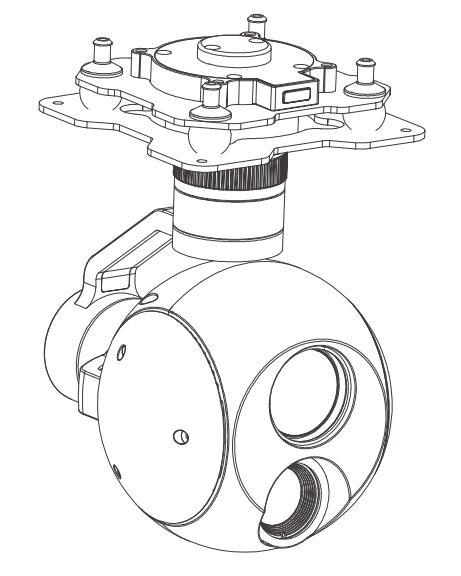
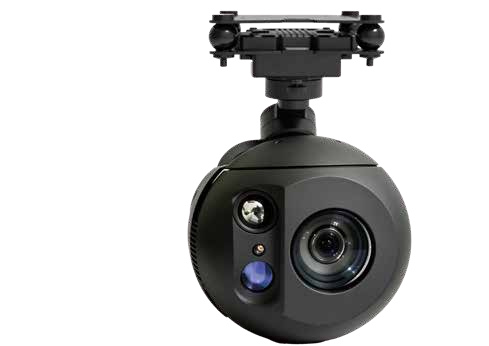
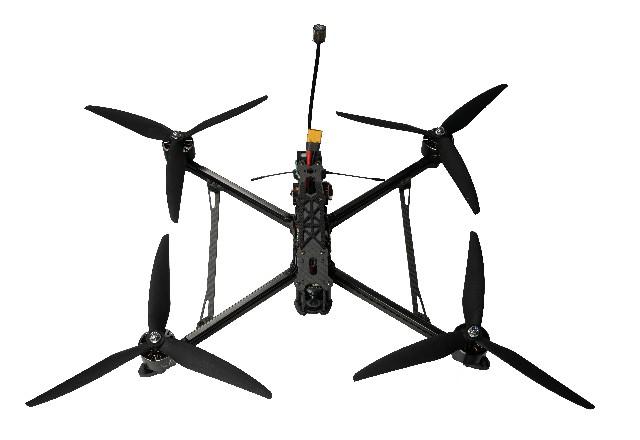
Product photographs have a different role. They identify the physical assembly and visible features. A photograph of the GC10 does not demonstrate a thermal palette, the quality of a thermal picture or a calibrated output. Presenting that image beside a clearly labelled editorial legend keeps the two forms of evidence in their proper roles.
Choose the view that communicates the review question
Start with the question the reader needs to answer. A report about the location of a thermal pattern should make that location and the palette convention intelligible. A product discussion about presentation options should identify the actual options documented for the offered version. Neither task requires a decorative claim about exceptional sensitivity or temperature accuracy.
Use the supplier's relevant sample to review the offered presentation. Record the palette description and explain why the selected view communicates the intended observation. If the available picture does not answer the question, identify the missing example rather than attempting to repair it with unsupported annotations.
The GC10 Dual Sensor Gimbal Camera details list the supported brochure palette families. For a report or sample review, carry the actual presentation label alongside the supplied image. Clear visual language makes qualitative thermal material easier to read while keeping measurement claims within their documented scope.
GC10 thermal palette questions
What does a white-hot label tell the report reader?
It explains the general grayscale direction, with warmer appearance represented lighter. It does not provide a numeric reading. The caption still needs to identify the actual supplied thermal view and relevant observation.
Does black-hot indicate a different detector?
The name describes a reversed grayscale presentation. It is not a detector identity or a statement of measurement capability. The actual camera configuration should be identified independently of the palette label.
Can a pseudo-color picture establish an equipment fault by itself?
A color presentation needs its stated legend and inspection context. Color alone does not supply a validated fault criterion. Keep a visible pattern description separate from any qualified diagnostic conclusion.
Are the diagrams here actual GC10 thermal samples?
They are editorial explanations of palette labels and caption responsibilities. No camera-captured thermal scene is represented. An actual sample review requires the supplier's identified output from the offered configuration.




 Tel: +86-13959965075
 Email: info@fpvdroneskit.com
 MP/WhatsApp: +86-13959965075
 Manufacturer Address:Quanzhou Valley Nanan Science and Technology Innovation Center, No. 89 Shijing Avenue, Shijing Town, Nanan City, Fujian Province