Author:Military Drone Manufacturer TIME:2026-09-06
Introduction
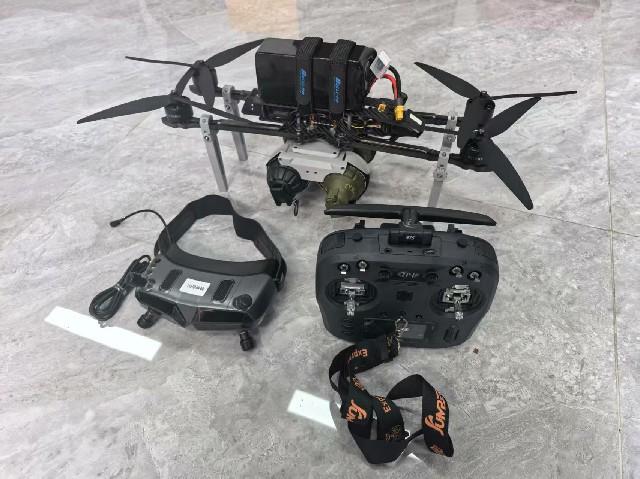
Modern combat environments are defined by speed, complexity, and information dominance. FPV drones contribute to this transformation by providing immediate, localized aerial capability that was previously unavailable at the tactical level. Their growing presence is reshaping how forces perceive, navigate, and engage the battlefield.
Decentralized Aerial Awareness
FPV drones allow aerial awareness to be generated at the point of contact rather than from distant command centers. This decentralization enables faster responses and more context-aware decisions.
Operators embedded with frontline units can adapt drone usage to evolving conditions, improving coordination between aerial observation and ground action.
Acceleration of the Engagement Cycle
By delivering real-time visual data, FPV drones accelerate engagement cycles. Units can identify, assess, and respond to situations without waiting for external intelligence support.
This acceleration favors forces that can process information quickly and act decisively, making FPV drones an important tool in time-sensitive operations.
Adaptation to Urban and Hybrid Warfare
Urban and hybrid warfare environments place unique demands on unmanned systems. FPV drones meet these demands through close-range operation and high maneuverability.
They support navigation through dense infrastructure, monitoring of confined spaces, and observation of concealed movement, enhancing operational effectiveness in challenging settings.
Psychological and Operational Effects
Beyond physical capabilities, FPV drones introduce psychological and operational effects. Their presence alters how space is contested and how units maneuver, increasing caution and influencing movement patterns.
These effects contribute to broader changes in how combat environments are managed and controlled.
Implications for Defense Technology Development
The transformation driven by FPV drones has implications for defense technology development. Manufacturers must focus on resilience, ease of integration, and adaptability to evolving threats.
Systems designed for rapid iteration and field-level modification are better suited to these dynamic environments.
Conclusion
FPV drones are reshaping modern combat environments by enabling decentralized awareness, accelerating engagements, and supporting operations in complex terrain. Their influence extends beyond individual missions, contributing to a broader transformation in how modern warfare is conducted.

 Tel: +86-13959965075
 Email: info@fpvdroneskit.com
 MP/WhatsApp: +86-13959965075
 Manufacturer Address:Quanzhou Valley Nanan Science and Technology Innovation Center, No. 89 Shijing Avenue, Shijing Town, Nanan City, Fujian Province