Author:Military Drone Manufacturer TIME:2026-11-06
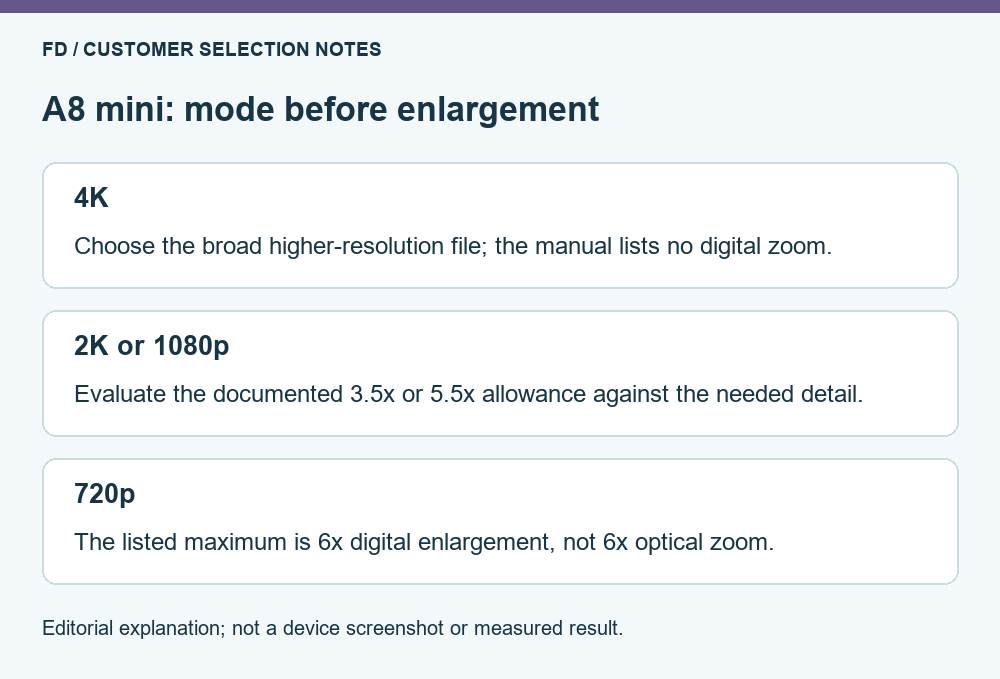
Choose the SIYI A8 mini recording mode around the picture you need, because its digital zoom allowance changes with resolution. The current user manual describes no digital zoom in 4K mode, up to 3.5x in 2K, 5.5x in 1080p and 6x in 720p. Those choices do not turn the fixed lens into an optical zoom. For a lightweight drone filming broad scenes, the higher-resolution mode may be useful; for an operator who needs electronic enlargement, a lower-resolution mode may be more practical. Compare both using the original output your customer will actually review before choosing the supplied setup.
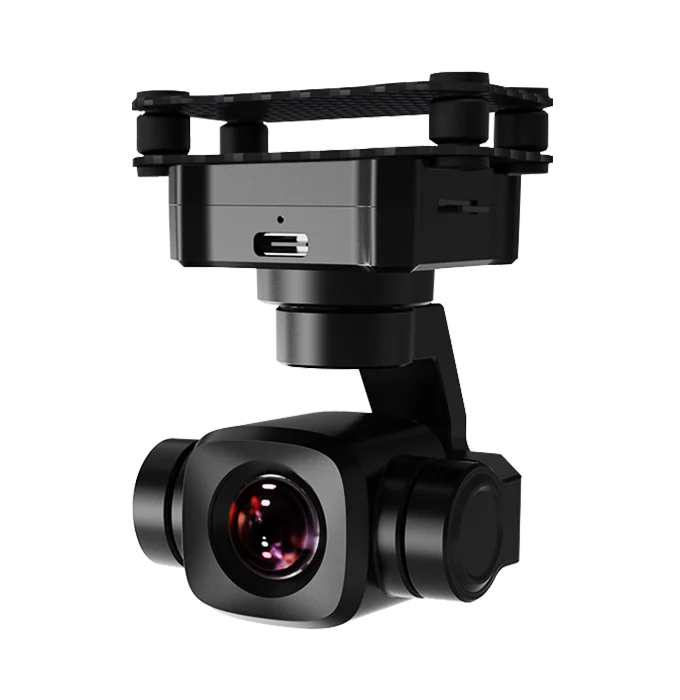
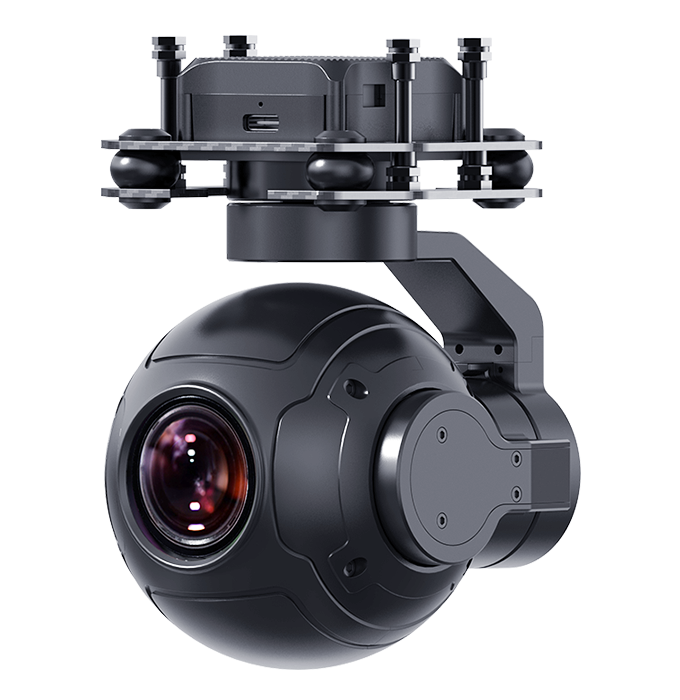
A8 mini is a small visible-light gimbal camera with a fixed focal length. SIYI lists a 95 g weight, a three-axis gimbal and an 8 MP sensor. Its combination of a small body and several video modes makes it interesting for lightweight observation platforms, but the recording and enlargement choices still need to fit the task. The product name does not describe one mode in which every headline feature operates together.
| Manual mode | Digital zoom allowance | A sensible selection question |
|---|---|---|
| 4K | No digital zoom | Is the broader high-resolution frame the useful deliverable? |
| 2K | Up to 3.5x | Does modest electronic enlargement help the viewer? |
| 1080p | Up to 5.5x | Does this output fit the existing viewing or recording system? |
| 720p | Up to 6x | Is enlargement more useful than the higher pixel count for this task? |
The allowances come from the A8 mini user manual v1.10. They should remain attached to their modes in a quotation. Writing “4K, 6x zoom” as two adjacent selling points without this qualification can lead a customer to expect a combination that the manual does not describe.
Begin with the object of the purchase: what should someone be able to understand from the picture? A building-progress record may need roof sections, access paths and surrounding context in one image. A live observer may instead want a small feature enlarged on the screen. Those are different viewing priorities even when the same camera could be considered for both.
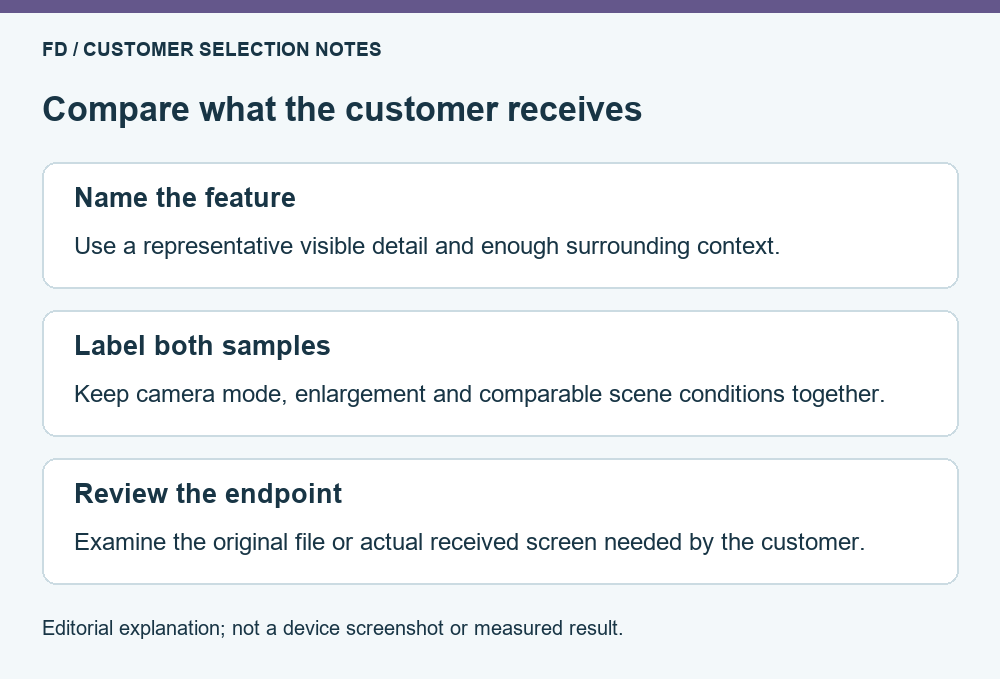
Write a short acceptance sentence such as “the reviewer can identify the relevant roof section and see its overall condition in the original clip.” Avoid a vague requirement for the “highest quality” because it does not tell a supplier whether coverage, detail, enlargement or file format matters most. If the customer needs readable markings or a small defect, supply a representative example of that feature rather than only naming a zoom ratio.
Do not decide by the size of a presentation-window preview. A compressed message attachment and an original file may look different. View the proposed delivery file at a known scale and retain enough surrounding scene to understand what it depicts. This makes the mode comparison relevant to the customer's actual review.
The A8 mini lens does not gain a longer optical focal length when a digital zoom setting changes. Electronic enlargement changes the displayed or processed image. It can improve the convenience of viewing a feature, but a larger displayed feature is not automatically a new optical observation. This distinction matters when the purchase is intended to replace a true optical-zoom camera.
A reviewer already has enough source detail and wants to inspect a smaller portion conveniently.
The source does not resolve the required feature; making the same information larger may not answer the question.
Use the least enlargement that answers the viewing task. Returning to a wider view can be valuable when a customer needs to relate a detail to the rest of a structure. A sample should therefore include ordinary framing and the proposed enlarged view, instead of presenting only a tightly selected crop. No digital setting establishes a guaranteed inspection distance.
Ask for a short 4K-mode clip and a second clip in the proposed enlargement-capable mode, using comparable scene and lighting conditions. The purpose is to compare two buying options, not to claim a laboratory test. Record the selected mode and digital setting with each file so that the viewer knows which configuration produced it.
Choose a scene with both broad context and the kind of feature the customer wants to inspect. A roof surface with an edge, gutter and contrasting fitting is more informative than an unrelated scenic demonstration. The customer can judge whether the whole scene is more useful, whether a particular feature remains understandable and whether the resulting picture works on the intended screen.
Keep camera movement and lighting changes from becoming the main difference between clips. If one file is static in bright light and another is moving in shadow, a preference may reflect the conditions rather than the mode. A supplier sample is useful only within its documented circumstances; it is not proof of performance on every aircraft.
Consider the viewer's final screen as well. A small screen viewed by one operator and a larger review monitor can make the same file feel different. Keep the test question about recognizable information, not only apparent sharpness at one window size. If customers will extract still frames from video, include that step in the comparison: a mode chosen for comfortable live viewing may not provide the saved-frame result their report needs.
The mode matrix is not a complete video-system specification. A file saved at the camera and a picture received through an aircraft link are different outputs. SIYI lists Ethernet, CVBS and Micro-HDMI video connections for A8 mini. The receiving hardware and software still have to support the particular output used in the proposed package.
If the task is a saved visual record, inspect the camera's own file. If an observer must make decisions from a live screen, inspect that received picture as well. It may have a different resolution, compression history or display arrangement. Buying a camera with a higher-resolution local mode does not by itself upgrade an existing transmitter, receiver or screen.
There is also a current documentation difference to resolve before specifying exact 4K dimensions: the web specification and manual do not use the same 4K pixel width. Keep the mode name and manual zoom limitation clear, and ask for the actual delivered file properties rather than combining the two documents into a new unverified format.
Broad progress documentation: an operator needs a coherent overview of a small construction area and saves original files for later review. If the 4K-mode sample provides the intended view, the absence of digital zoom in that mode may be acceptable. The useful purchase is a small stabilized camera that produces the required whole-scene record, rather than the largest enlargement number.
A shared observation screen: another project has an established 1080p viewing path and values convenient enlargement of selected features. Its buyer may prefer to evaluate the 1080p mode with its manual-listed digital zoom allowance. That does not make the lower-resolution mode universally better; it makes it a candidate for a different endpoint and viewing task.
These are hypothetical selection examples. Neither is an FD customer case or a measured claim about detail at a particular distance. If the requirement ultimately needs substantial new optical detail, the useful next step may be a different camera class rather than more digital enlargement from this fixed-lens model.
Include the required saved file, expected live input, preferred mode and intended application when asking for a package. Explain whether the camera will provide an overview, an enlarged observation view or both at different times. The supplier can then discuss realistic accessories and configuration without guessing what the word “zoom” means to the buyer.
Keep basic installation information alongside the image request. The 95 g camera figure is not the complete aircraft installation mass. Mounting pieces and cables also matter. SIYI additionally distinguishes early manufacturing lots made before June 2023 when describing maximum supply voltage, so an older physical unit needs a revision check instead of being assigned every current web specification.
Choose a default mode that suits the routine job, while keeping any secondary mode clearly described. This reduces the chance that a later operator changes a resolution setting and expects the same enlargement allowance to remain available.
For the current model and a configuration discussion, review the SIYI A8 mini camera offered by FD. A useful inquiry names the outcome and includes representative subject detail; it does not need an invented flight-range or image-quality guarantee.
The current manual states that 4K mode does not support digital zoom. Its maximum 6x allowance belongs to 720p mode. Specify the mode with the zoom request rather than treating the two headline figures as simultaneous.
No. It provides the largest manual-listed digital zoom allowance, but usefulness depends on source detail and the intended screen or file. A broader higher-resolution view may answer another task better.
No. This model is a visible-light camera. Electronic enlargement and low-light marketing descriptions do not add a thermal sensor or temperature-measurement capability.
Ask for original files from the supplied software and camera revision, labelled with mode and zoom. That is more informative than an unlabelled promotional clip or a screenshot copied from a viewing application.
It establishes only part of the physical connection. The receiving device must accept the chosen format and the package must support the required control method. Evaluate the intended combination before ordering around it.
Source basis: SIYI A8 mini current specifications and User Manual v1.10, checked 21 October 2026. The exact 4K pixel-width difference is left unresolved; no comparative flight test is claimed.

 Tel: +86-13959965075
 Email: info@fpvdroneskit.com
 MP/WhatsApp: +86-13959965075
 Manufacturer Address:Quanzhou Valley Nanan Science and Technology Innovation Center, No. 89 Shijing Avenue, Shijing Town, Nanan City, Fujian Province