| Price | On request |
|---|---|
| Model | VIO F1 |
| Visible camera | Sony 1/2.5-inch CMOS; 20x optical zoom |
| Thermal imager | F1: FLIR Boson 640 Radiometric; native 640 x 512; 60 Hz imaging |
| Stabilization | Three-axis mechanical gimbal |
| Video output | HDMI / RTSP |
| Storage | 3840 x 2160 at 30 fps; MP4 video and JPEG photographs |
| Power input | 14.5-52 V |
| Dimensions | 173 x 148 x 159 mm (D x W x H) |
| Weight | 854 g, manufacturer-listed |
| Lens configuration | F1 thermal lens: 14 mm fixed-focus |
| Control interfaces | UART and Ethernet; documented ArduPilot/PX4 environment |
Gremsy VIO F1 · FLIR-equipped EO/IR payload
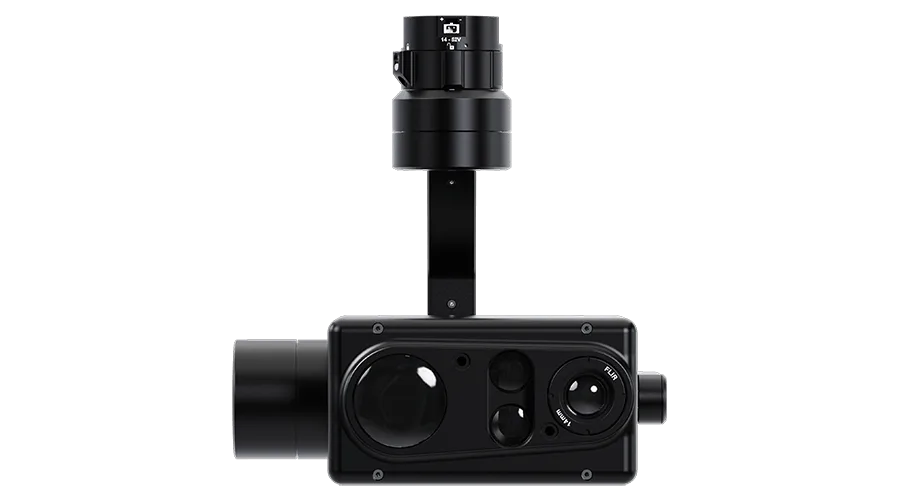
VIO F1 combines a 20× optical-zoom visible camera with a FLIR Boson 640 Radiometric thermal core on a three-axis gimbal. It is intended for drone projects where ordinary photographs and infrared observations need to describe the same equipment, building or inspection area.
The visible camera records up to 3840 × 2160 at 30 fps and captures JPEG photographs. Its optical zoom helps frame details such as equipment housings, connections and roof features while retaining an ordinary image for the inspection report.
The F1 uses a 14 mm lens and a FLIR Boson 640R core with a published 60 Hz thermal imaging rate. This is the F1 configuration; the VIO G1 uses a different thermal core, lens and frame rate.
A radiometric sensor, a colour thermal video and a file containing temperature data are different things. An operator may need only a live thermal view, while an inspection team may need values that can be examined after the flight. Those requirements lead to different software and recording questions even when the camera housing is the same.
The published ordinary media formats include JPEG photographs and MP4 video. Those files should not be assumed to be FLIR R-JPEG or SEQ data suitable for a particular offline analysis program. If temperature reporting is important, state the required file or stream format and analysis software when requesting the payload.
The sensor's imaging rate describes the thermal channel. Gremsy's V3 software announcement describes a separate RAW IR streaming feature and lists a lower data rate for F1. Firmware, software and data-export method must therefore be matched to the intended workflow.
| Visible camera | 20× optical zoom; Sony 1/2.5-inch CMOS |
|---|---|
| EO recording | 3840 × 2160 at 30 fps; MP4 |
| Thermal configuration | FLIR Boson 640 Radiometric; native 640 × 512 |
| F1 thermal lens | 14 mm fixed focus |
| Thermal imaging rate | 60 Hz; separate from RAW temperature-data output |
| Video paths | HDMI and RTSP |
| Payload weight | 854 g, manufacturer-listed |
| Input voltage | 14.5–52 V |
| Mounting | Bottom-mounted gimbal with VIO/ZIO quick-release system |
VIO provides HDMI/RTSP video and published UART/Ethernet control paths, with documentation for ArduPilot and PX4 environments. The aircraft-side connection, ground application and video receiver all influence the experience at the operator's screen. A compatible autopilot alone does not establish the full integration.
For civil inspection work, consider how the operator switches between EO and IR and how the resulting image is recorded. The manufacturer lists single-channel and picture-in-picture views. A report may benefit from a visual overview and a corresponding thermal view rather than one heavily enlarged image without location context.
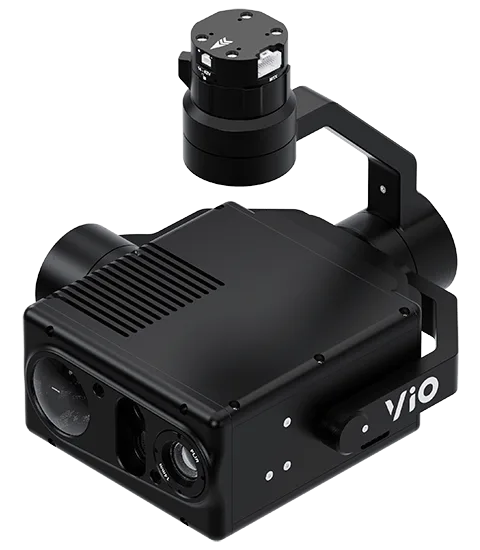
Choose VIO F1 when both visible imaging and the specified FLIR thermal channel are useful to the job. If the requirement is entirely visual, the ZIO visible-only payload is worth comparing. If the aircraft has a tight payload allowance, include the mount and damping assembly in the mechanical review before choosing either camera.
The three-axis gimbal provides mechanical camera stabilization. Gremsy also describes electronic image stabilization in its V3 software release, subject to the supported firmware and software combination. We treat EIS as a version-dependent feature rather than a standard claim for every VIO unit.
Image quality still depends on installation vibration, lens settings and the video path. For repeatable inspection footage, check vibration at the mount and the selected video settings. Thermal image interpretation also depends on the inspected surface and operating conditions.
Send FD your aircraft and controller models, preferred HDMI or network video input, and whether the thermal result is live viewing, ordinary recording or temperature data for analysis. For data work, name the analysis software and required format so the relevant firmware and output method can be discussed before configuration.
Manufacturer references: VIO F1 specifications · VIO V3 software conditions · Media-format FAQ.
| Visible camera | Sony 1/2.5-inch CMOS; 20x optical zoom |
|---|---|
| Thermal imager | F1: FLIR Boson 640 Radiometric; native 640 x 512; 60 Hz imaging |
| Thermal lens | F1 thermal lens: 14 mm fixed-focus |
| Stabilization | Three-axis mechanical gimbal |
| Video output | HDMI / RTSP |
| EO recording | 3840 x 2160 at 30 fps; MP4 video and JPEG photographs |
| Power input | 14.5-52 V |
| Payload weight | 854 g, manufacturer-listed |
| Payload dimensions | 173 x 148 x 159 mm (D x W x H) |
| Control | UART and Ethernet; documented ArduPilot/PX4 environment |
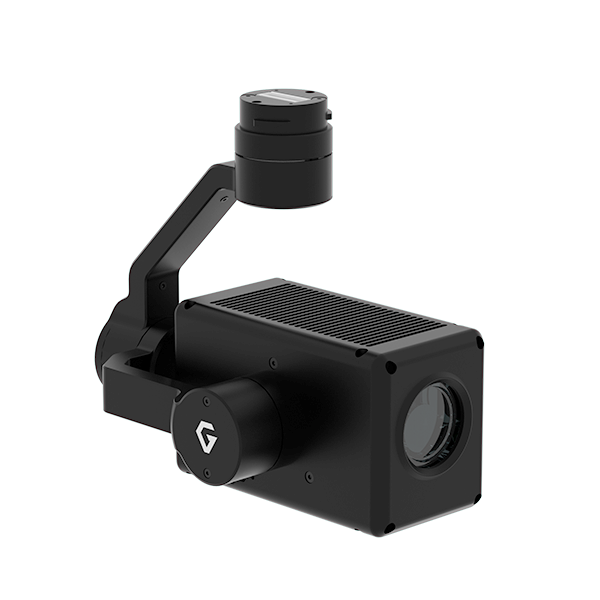
Gremsy ZIO combines 20x optical zoom and a three-axis UAV gimbal. Compare 4K onboard recording, HDMI live video and RTSP Ethernet output....
Gremsy VIO F1 pairs 20x optical EO imaging with a FLIR Boson 640R thermal core and 14 mm lens. Explore video paths and thermal-data requirements....

 Tel: +86-13959965075
 Email: info@fpvdroneskit.com
 MP/WhatsApp: +86-13959965075
 Manufacturer Address:Quanzhou Valley Nanan Science and Technology Innovation Center, No. 89 Shijing Avenue, Shijing Town, Nanan City, Fujian Province